General
Tax Lien vs Tax Deed: How to Choose the Right Strategy
September 20, 2026
16 min read
You're probably looking at the same choice most investors eventually face. One county is advertising tax lien certificates with statutory interest. Another is running a tax deed sale on parcels that look cheap from the outside. On paper, both options sit under the same broad tax-sale umbrella. In practice, they behave like two different businesses.
That's where most “tax lien vs tax deed” articles fall short. They define the terms, then stop. The expensive part starts after the definition. It starts when redemption drags out your capital, when a deed doesn't produce clean title, or when a winning bid turns into a legal project you didn't budget for.
A useful comparison has to answer the question an active investor has. Not “what's the legal difference?” but “which path fits the way I deploy money, manage risk, and exit deals?”
Standing at the Auction Block
It's a humid Thursday morning outside a county courthouse. Two empty lots sit next to each other on the sale list. Same neighborhood. Same rough curb appeal. Same delinquency story from a distance.
One lot is being sold as a tax lien certificate. You step in, cover the unpaid taxes, and wait to see whether the owner redeems. If they do, your upside comes from statutory interest. If they don't, you may have to push the file through foreclosure before the paper turns into control.
The other lot is being sold as a tax deed. You win the bid and walk away with ownership rights, but also with every practical problem attached to that ownership. Title issues, possible occupants, redemption rights in some states, and post-sale cleanup all move onto your side of the table.
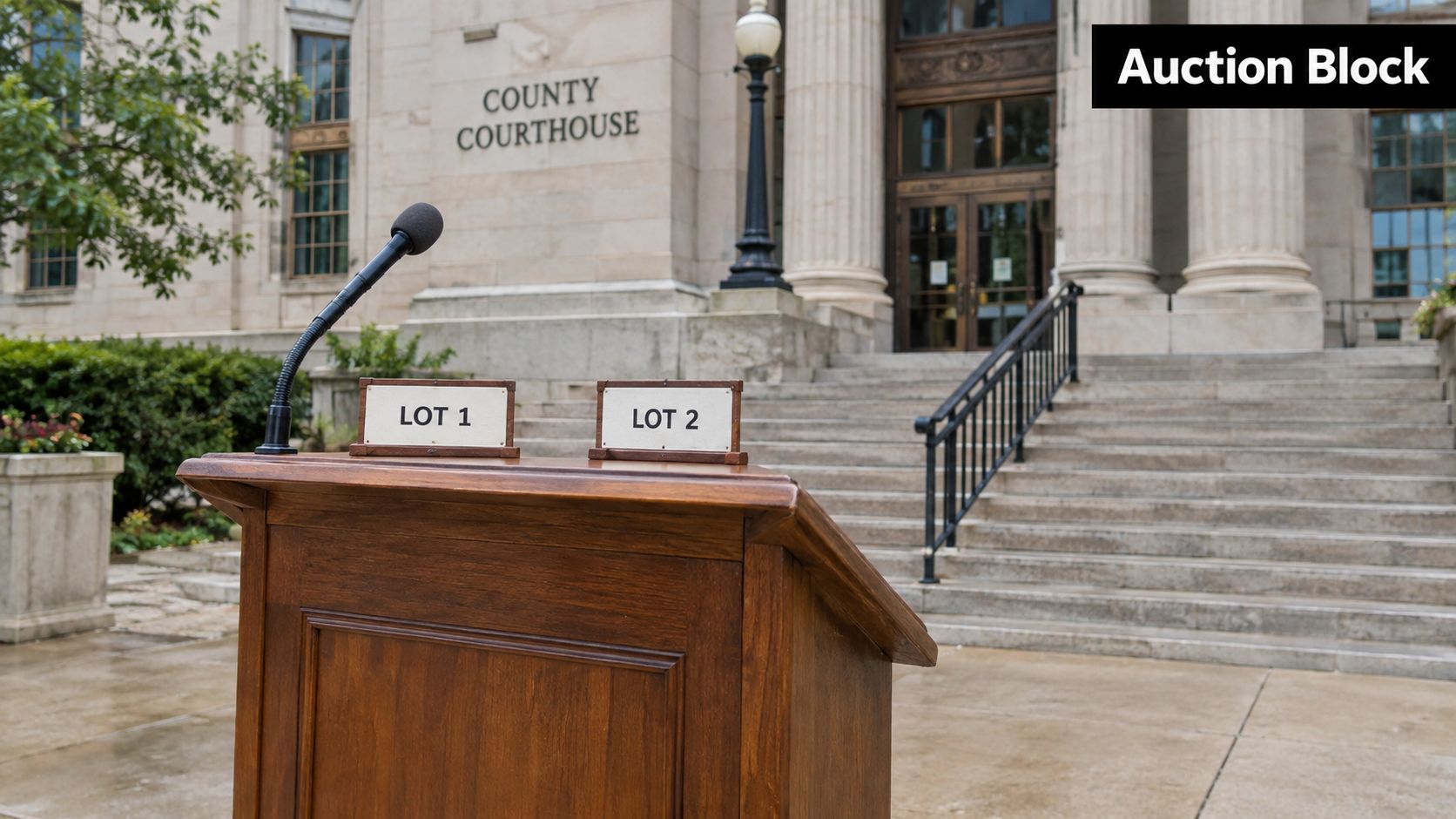
The parcels may match. The risk doesn't.
Newer bidders get into trouble when they underwrite the dirt and ignore the instrument. But the instrument is the deal.
With a lien, you're buying a collection right. With a deed, you're buying an ownership problem that may later become an ownership opportunity. Those are not interchangeable positions, even when the parcel number looks equally attractive.
Practical rule: If you can't explain your exit before the first bid, you're not ready for either strategy.
The emotional cost is real too
Tax sales also test patience in different ways. Liens can leave you sitting on capital longer than you expected. Deeds can force you into legal and operational work you never wanted to do in the first place.
That's why the tax lien vs tax deed decision isn't just about return. It's about fit. Some investors want predictable paper-backed yield. Others want direct control of property, even if that means more friction after the auction. The wrong choice usually doesn't fail because the statute was hidden. It fails because the investor chased the wrong outcome.
What Tax Liens and Tax Deeds Actually Are
Before talking strategy, it helps to define each position with precision.
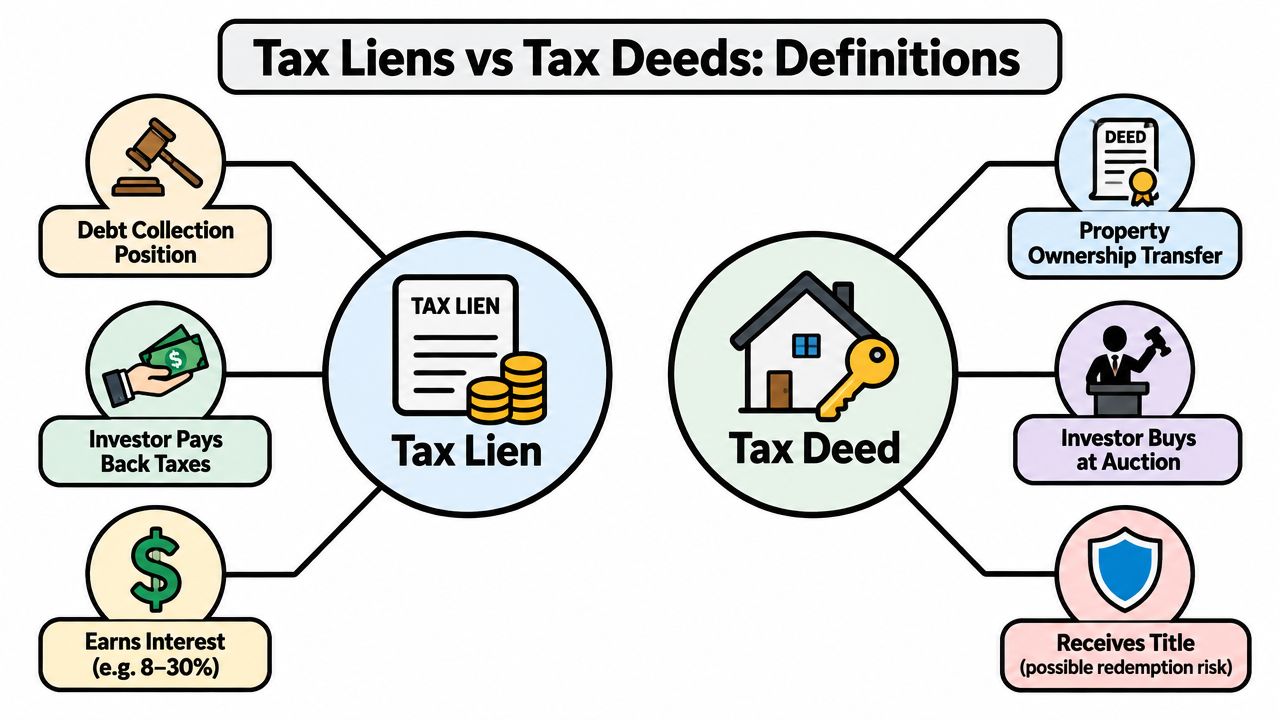
A tax lien is a debt position. The government is owed delinquent property taxes, and it sells the right to collect that debt to an investor. The owner usually keeps title while the redemption period runs. Your claim is against the tax debt, not immediate possession of the real estate. If you need a quick refresher on how obligations like these are structured more broadly, this overview of tax liabilities explained for startups is a useful non-real-estate primer on what a tax obligation represents.
A tax deed is an ownership position. The taxing authority sells the property itself after the statutory process has run its course. Instead of buying the debt, you're buying the transfer of title interest from the sale.
A quick comparison
| Tax Sale Type | What You Buy | What the Owner Keeps at First | Typical Investor Focus |
|---|---|---|---|
| Tax lien | The right to collect delinquent taxes | Title to the property | Yield, redemption outcome, foreclosure optionality |
| Tax deed | The property interest sold at auction | Often no title, though rights can vary by state | Control, resale, rehab, title cleanup |
The market is large, but the structures diverge
The scale of these markets is one reason investors keep returning to them. One market summary reported that tax lien sales increased from $3.8 billion in 2021 to $5.02 billion in 2024, while another showed tax deed auctions rising from 1,299 sales in 2019 to 2,350 in 2022 and tax lien auctions rising from 1,011 to 1,517 over the same period, according to this tax-sale market overview. The same report said tax lien parcels advertised increased from 1,144,907 in 2019 to 1,364,345 in 2022, with advertised dollar value climbing from about $2.70 billion to $4.57 billion.
Why definitions matter in practice
Those numbers matter less than the structural split behind them.
A lien buyer is usually underwriting time, redemption behavior, and procedural follow-through. A deed buyer is underwriting title quality, possession, and the cost to turn a recorded deed into a financeable, saleable asset.
The biggest beginner mistake is assuming both paths lead to the same kind of control on the same timeline. They don't.
The Legal Mechanics Behind Each Pathway
The legal path determines the investment path. If you misunderstand the sequence, you'll price the deal wrong before the auction even starts.
How a tax lien usually works
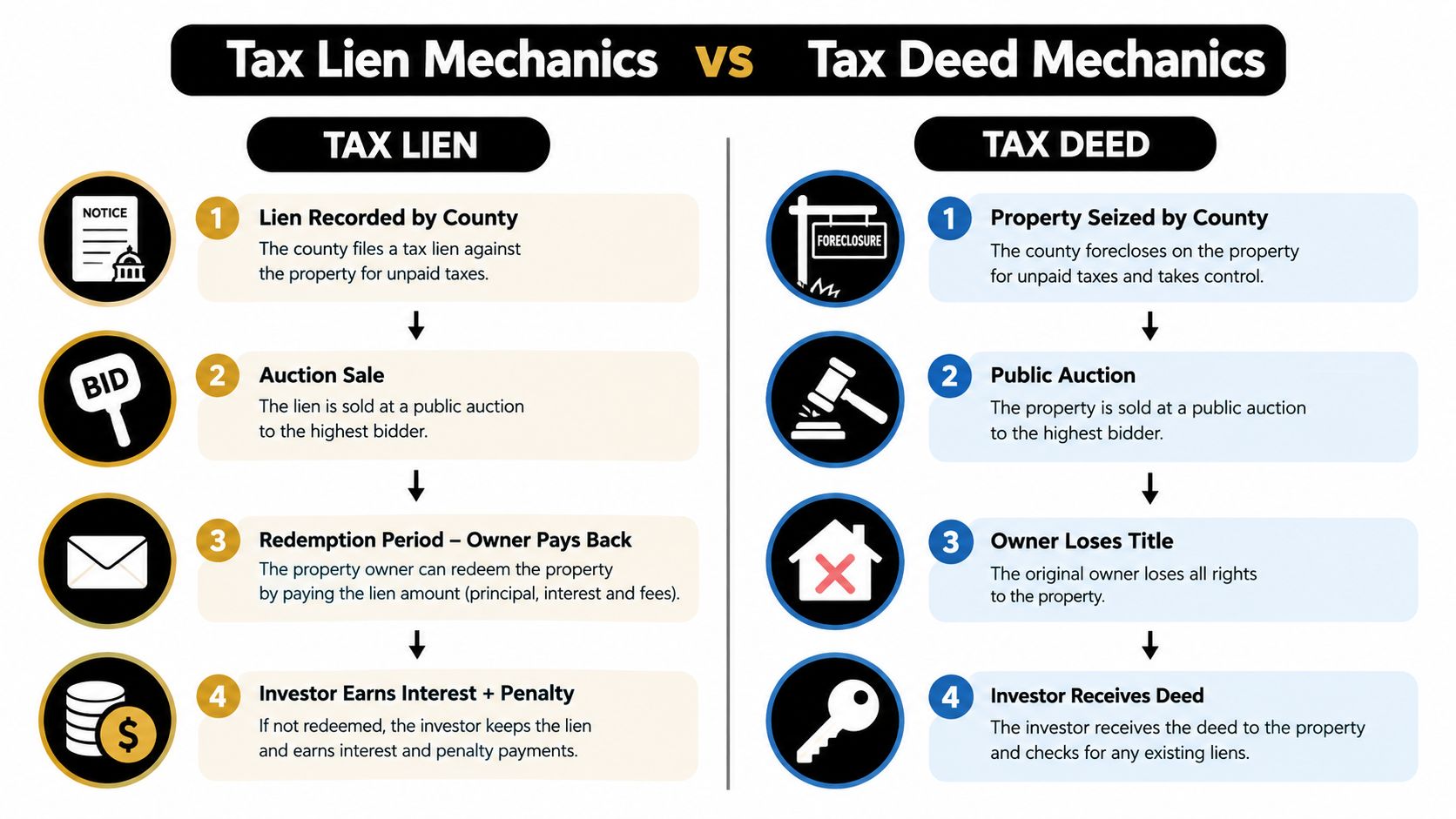
A county records a claim for unpaid property taxes. Instead of waiting indefinitely for collection, it auctions that claim. The winning bidder pays the delinquent amount and receives a certificate or similar evidence of the lien position.
The owner then gets a redemption period set by state law. During that window, the owner can repay the taxes, along with whatever statutory interest or penalty structure the jurisdiction allows. If redemption happens, the lien investor gets paid out according to that framework.
If redemption doesn't happen, the investor may have the right to start foreclosure or another statutory conversion process. That's the point where a passive-looking yield play can turn into a legal and administrative project.
For a visual walk-through of how public filings connect to the process, it also helps to understand whether deeds are public record, because county record visibility affects how investors verify sale history and title events.
Later in the process, this video gives a useful overview of how investors think about the distinction in the field.
How a tax deed usually works
A tax deed sale is more direct on paper. After the delinquency timeline and statutory notice process are completed, the county auctions the property itself. The winning bidder receives a deed or deed-like instrument under that jurisdiction's rules.
That sounds clean. It often isn't.
Some deed states still layer in redemption rights, post-sale waiting periods, or procedural requirements before your title becomes easy to resell or finance. The auction may transfer ownership rights, but that doesn't guarantee marketable title on day one.
What changes your underwriting
A useful way to frame tax lien vs tax deed is this:
- Liens are collection-first investments. You're underwriting repayment behavior and legal timing.
- Deeds are control-first investments. You're underwriting title survivability and operational friction.
- Hybrid outcomes are common. A lien can become a deed later. A deed can still behave like a delayed claim if redemption rights survive.
According to SmartAsset's explanation of tax lien and tax deed investing, tax lien investing is a debt-collection position rather than an ownership position, and many states advertise statutory returns in the 8% to 36% range depending on jurisdiction. That headline sounds attractive, but the practical downside is usually tied to redemption timing and the cost and complexity of foreclosure if redemption never comes.
Side-by-Side Comparison Across Key Criteria
When investors compare tax lien vs tax deed, they usually focus on the upside first. That's backwards. Start with control, timing, and cleanup burden. Then decide whether the return profile still fits.
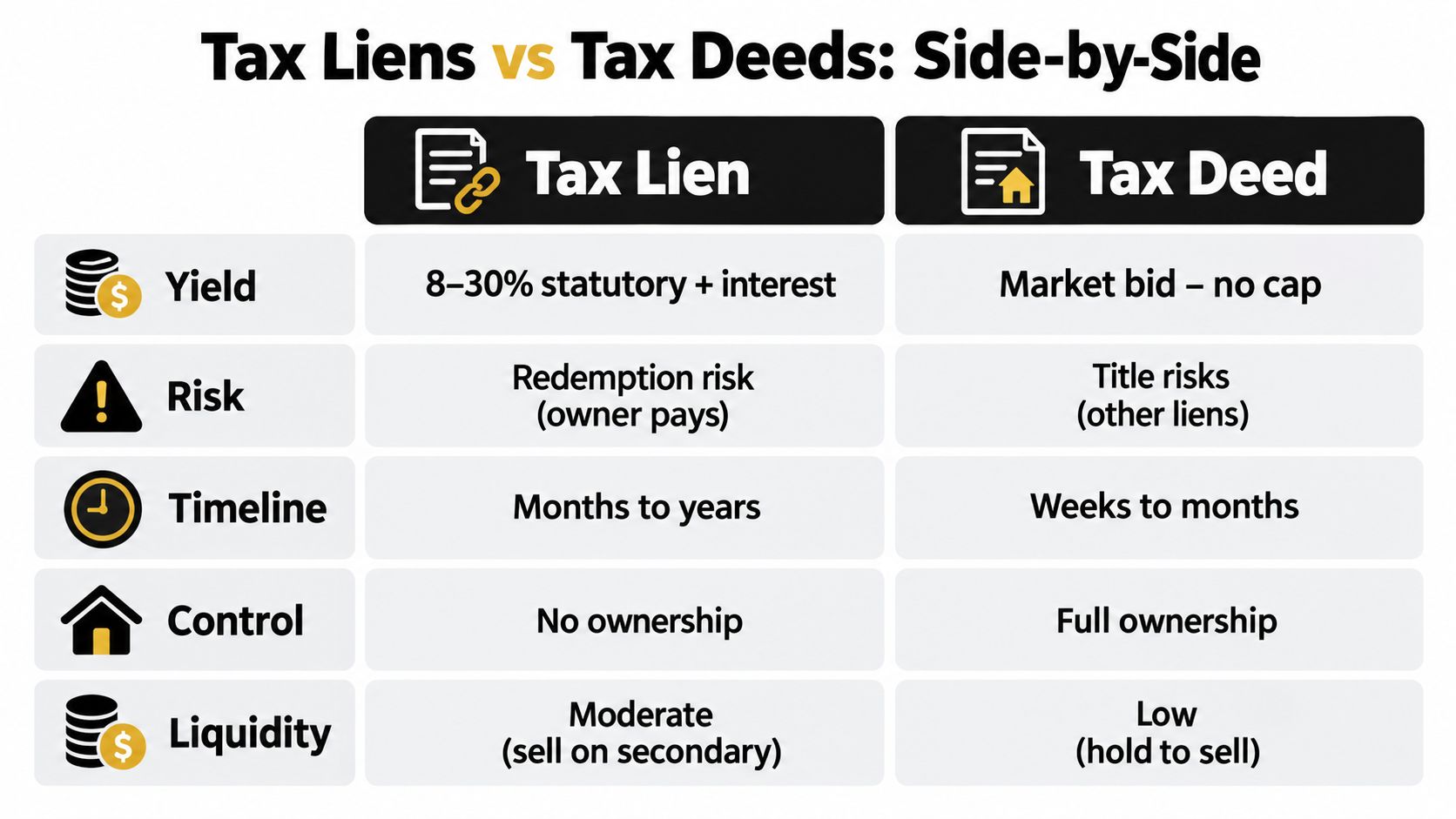
| Criterion | Tax Lien | Tax Deed |
|---|---|---|
| What you buy | A claim on delinquent taxes | Ownership interest sold at auction |
| Main objective | Interest income and possible later conversion | Property control and resale or rehab potential |
| Possession | No immediate possession | Often faster path to possession, but not always clean |
| Core risk | Redemption timing and foreclosure effort | Title defects, occupancy, legal cleanup |
| Time horizon | Often longer and less predictable | Can be faster operationally, slower legally |
| Capital style | Often suited to spreading money across certificates | Often requires more concentrated deal-level commitment |
| Exit path | Redemption payout or later foreclosure | Quiet title, resale, refinance, rehab, wholesale |
Yield versus control
Liens appeal to investors who want the economics of a paper asset. If the owner redeems, the deal often resolves without property management, eviction, or rehab. That can work well for investors who prefer process over construction.
Deeds attract investors who want direct control. If your business is built around taking possession, fixing distress, or moving property to another buyer, a deed may line up better with your model.
Risk doesn't disappear. It shifts.
A lien investor usually has less exposure to title defects at the front end because they're not stepping into ownership right away. Their main problem is time. Capital can sit. Foreclosure can become necessary. A deal that looked passive can become procedural.
A deed investor gets the opposite profile. Control comes sooner, but legal and operational unknowns arrive sooner too. The risk isn't “will I own something?” It's “what exactly did I just inherit?”
Buy deeds only after underwriting the problems that survive the auction, not the discount printed in the sale list.
Time and capital matter more than most people admit
Investors with limited bandwidth often overestimate their ability to manage post-deed friction. Investors with limited patience often underestimate how long liens can tie up capital.
That's why the better question isn't “which one is better?” It's:
- Do you want income or control?
- Can you tolerate legal lag without forcing a bad exit?
- Will your business model still work if the clean scenario never shows up?
If you can answer those three questions, the comparison gets much easier.
How Fix-and-Flip and Wholesale Investors Use Each Path
Fix-and-flip operators and wholesalers don't use these tools the same way certificate-focused investors do. They care less about the legal label by itself and more about what the path lets them do next.
How flippers tend to use liens
A flipper usually doesn't buy a lien because they love waiting. They buy liens when the jurisdiction offers a reasonable path from debt position to eventual control, or when the certificate itself works as a yield-bearing place to park capital while they pursue other active projects.
The disciplined approach is to screen counties first, not parcels first. If the redemption framework is slow, the foreclosure path is cumbersome, or notice defects regularly create delay, the lien may never fit a flip pipeline no matter how attractive the parcel looks.
Some investors also build lead funnels around delinquency before bidding at all. If that's part of your acquisition model, this guide to tax delinquent properties for sale is helpful for understanding how those opportunities surface before they become straightforward auction buys.
How flippers use deeds
A flipper uses tax deeds more like distressed acquisitions. The bid isn't just about what the property might sell for. It has to leave room for title work, possession costs, hold time, and rehab uncertainty.
That means the best deed buyers rarely bid emotionally at the courthouse. They come in with a maximum number that already assumes the post-sale mess is real. If the legal file looks thin or the occupancy picture is unclear, they lower the bid or skip it.
How wholesalers approach both
Wholesalers often care about speed and assignability. A lien can work if the local market has buyers who understand certificate risk and are willing to step into that paper. A deed can work if the investor can secure enough control to move the opportunity downstream to a rehabber or landlord.
In practice, the cleaner wholesale play is usually not “buy anything cheap.” It's finding the instrument your buyer pool already wants. Many end buyers don't want to inherit unresolved title questions unless the spread is obvious.
Where tools fit into the workflow
This is one place where software can help, provided it's used for underwriting rather than optimism. PropLab is one example. It pulls public records, tax data, and market signals to estimate ARV, rehab costs, and a max offer price without requiring MLS access. For deed buyers, that helps tie auction bids to resale math instead of courthouse adrenaline. For investors screening distressed opportunities more broadly, its Daily Deals scanner covers 90+ major U.S. counties and can help build a county-by-county acquisition pipeline from public data.
If your model depends on resale, run the deal backward from exit price. Don't start from the county's minimum bid and hope the spread appears later.
The Hidden Costs That Erode Deed Returns
Deed investing gets mispriced. The sale clerk says “deed,” and many bidders hear “ownership solved.” That's often the wrong conclusion.
A deed can transfer an interest in property without delivering clean, insurable, easily marketable title. That gap is where many good-looking auction wins go bad.
What can survive the sale
Some states run redeemable-deed structures. In those places, winning the auction doesn't always mean the former owner's rights are fully gone on day one. In other states, the larger issue is not redemption but title quality. The deed may be real, yet still hard to finance or resell until the chain is cleaned up.
If you're evaluating that risk seriously, it helps to understand the broader concept of chain of title, because deed value depends heavily on whether later buyers and title companies accept the ownership history as clean.
According to DeedFlex's guide on tax liens and tax deeds, one of the biggest blind spots in deed investing is the survivability of title problems after the sale. That guidance notes that deed states are not uniformly instant-ownership markets, and some redeemable-deed states still allow the former owner to reclaim the property within a statutory period.
The costs that don't show up on the bid sheet
The county flyer won't usually tell you what it may take to turn that deed into a practical asset. The hidden costs often show up in a few predictable places:
- Title cleanup: Quiet title work, corrective filings, and attorney review can slow resale.
- Possession issues: Occupants may require formal removal or negotiated turnover.
- Lien surprises: Some obligations may not disappear as cleanly as a casual bidder assumes.
- Holding drag: Taxes, maintenance, insurance challenges, and dead time can stack up while paperwork moves.
Underwrite the ugly version
This is the practical mistake I see most often. Investors run numbers on the clean outcome, then bid as if every county file was perfectly noticed and every property will deliver vacant possession.
That's not conservative enough for deeds.
Underwrite the deed as if you'll need legal cleanup. If the deal still works, bid. If it only works when everything goes smoothly, pass.
A tax deed can still be the right move. It just needs to be priced as a legal-and-operational acquisition, not a simple courthouse bargain.
Making Your Decision With Confidence
The best choice usually becomes obvious once you stop chasing the headline and start matching the instrument to your actual business.
Choose liens when patience is part of the strategy
Tax liens fit investors who can treat the position like a debt instrument and let the statute do its work. If you don't need immediate possession, and you're comfortable with redemption uncertainty, liens can make sense as a more process-driven allocation.
That's especially relevant in a market where delinquency activity has drawn renewed attention. Rocket Mortgage's tax deed versus tax lien overview notes that tax liens often function like fixed-income instruments with statutory interest, while tax deeds are closer to distressed property acquisition with title risk, legal costs, and possible occupancy issues. The same coverage says IRS notices of federal tax lien rose above 214,000 in fiscal 2025, which is one reason investors are watching lien inventory more closely.
Choose deeds when control matters more than convenience
Tax deeds fit investors who want direct access to the estate and can absorb the friction that comes with it. If your business is built around rehab, resale, or fast repositioning, deeds may line up better than waiting through a lien redemption cycle.
But control only helps if you're equipped to use it. If title cleanup, possession work, and legal lag will jam your operation, the deed may be the wrong “cheap” deal.
A practical decision rule
Use this framework before you bid:
- Pick tax liens when you want yield, can wait, and don't need immediate property control.
- Pick tax deeds when you want the asset itself and can manage title and possession risk.
- Skip both when the jurisdiction is unfamiliar and you haven't verified how that county administers the statute.
There's also a softer skill that matters if you source tax-sale opportunities publicly or market off-market opportunities to buyers after acquisition. If you publish listings, deal recaps, or investor updates, this guide on how to create a content calendar for real estate is useful for keeping that outreach consistent without making every week a scramble.
The right tax lien vs tax deed choice isn't the one with the biggest story attached to it. It's the one that still works after you price the delays, legal steps, and cleanup nobody mentions from the podium.
If you're weighing liens against deeds, PropLab gives you a fast way to underwrite the property side before you bid. You can use it to estimate ARV, rehab costs, and a max offer price from public records and market data, then compare whether a deed deal still works once you account for cleanup risk.
About the Author
P
PropLab Team
Real Estate Analysis Experts
The PropLab team consists of experienced real estate investors, data scientists, and software engineers dedicated to helping investors make smarter decisions with AI-powered analysis tools.
Free account
Underwrite your next deal in under a minute
3 free analyses, no credit card. ARV, rehab, comps and exit strategy in one report.
