General
7 Best Hard Money Loans for Fix-and-Flip in 2026
October 12, 2026
17 min read

You've got a property under contract, the seller wants a firm closing date, and the renovation budget still has unanswered questions. The lender that quotes the fastest or lowest rate may not fund enough of the purchase and rehab to keep the deal intact. Start with the numbers that set the ceiling: after-repair value (ARV), the rehab estimate, and maximum allowable offer (MAO). PropLab produces those figures in about 60 seconds, giving you a deal-level basis for comparing lenders rather than relying on marketing claims.
Hard money loans are short-term, asset-based financing. The useful comparison is not which lender advertises the best rate. It's which lender's terms, points, draw process, maturity, and closing speed fit your project without consuming the margin between your MAO and realistic resale value. Your renovation estimate should also reflect the actual scope of work, such as when you estimate renovation costs in Utah.
1. Kiavi, formerly LendingHome
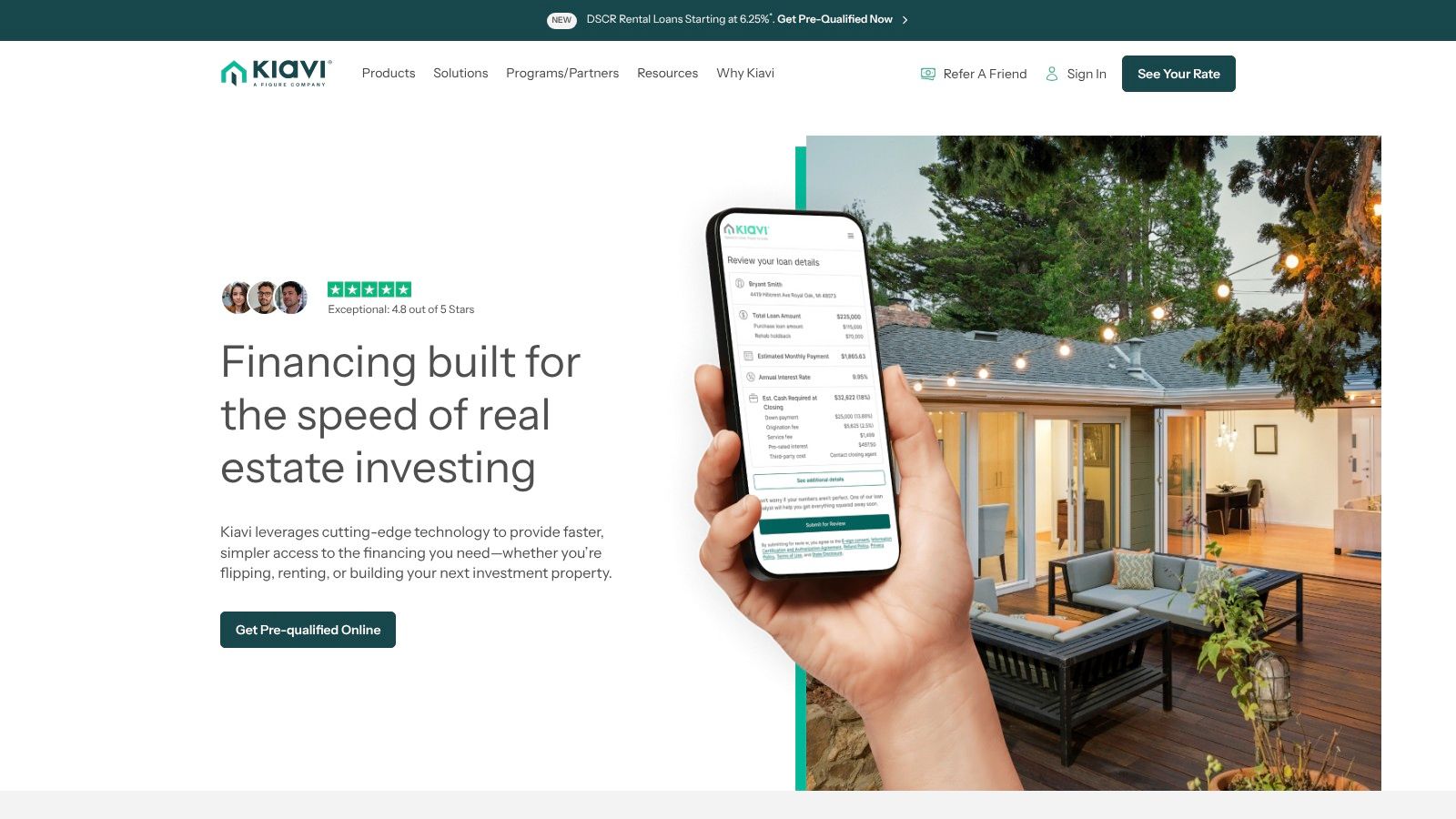
Kiavi is a strong fit when the deal is conventional enough for a smooth digital process and the borrower values predictable execution. Its online application, document upload, and status tracking reduce the back-and-forth that can slow a time-sensitive acquisition. The lender focuses on fix-and-flip, bridge, and rental financing, so its workflow is built around investment property underwriting rather than owner-occupied mortgage requirements.
Kiavi offers interest-only fix-and-flip terms of 12, 18, or 24 months, as described on its fix-and-flip lending platform. Qualified files may close in as little as 10 business days, but that timeline depends on the property, title, valuation, borrower file, and remaining conditions. Treat the advertised speed as a possibility, not a closing guarantee.
Best fit for repeatable projects
Kiavi's ARV-oriented approach can work well when your comparable sales support the finished value and the rehab scope is easy to document. The online workflow also suits repeat operators who want a familiar process across multiple markets. Newer investors may face tighter loan-to-value ratios and more conditions, especially when the property has unusual construction issues or the borrower has limited project history.
Before applying, prepare the evidence a lender will request. PropLab's guide to hard money lender requirements can help organize the property details, valuation support, budget, and exit plan.
Practical rule: A fast lender isn't useful if its maximum proceeds leave you short of the verified acquisition and rehab budget.
Kiavi's main trade-off is flexibility. Its technology can shorten a standard underwriting cycle, but a highly customized deal may need a lender willing to handle exceptions manually. Request the actual rate, points, loan-to-value, draw timing, extension pricing, and minimum-interest provisions before comparing the offer with another lender's headline terms.
2. Lima One Capital
Lima One Capital makes the most sense when your strategy may change after acquisition. Its program menu includes FixNFlip, Bridge Plus, Fix2Rent, and DSCR rental financing, giving investors a path from purchase and renovation to a longer-term rental exit. That flexibility matters when the resale market weakens but the completed property can support a refinance.
The lender operates nationwide and offers options designed for both individual projects and broader portfolios. Its investment loan programs include financing for fix-and-flip projects, bridge situations, rentals, and operators managing more than one property. Some flip-to-rent conversions may qualify for DSCR refinancing with seasoning waivers, subject to the applicable program and underwriting.
Strongest when the exit is still flexible
The practical advantage is continuity. If your MAO and rehab estimate support a profitable resale, a flip loan may be appropriate. If the finished property's rent and value support a long-term hold, the Fix2Rent route may reduce the need to move immediately to an unrelated lender.
That broader menu doesn't mean every file receives the same terms. Final pricing depends on borrower experience, property risk, loan-to-value ratio, location, and exit structure. An institutional process can also feel less flexible when a property falls outside standard guidelines.
Compare Lima One on the variables that affect your actual cash requirement:
- Program fit: Confirm whether the property belongs in FixNFlip, Bridge Plus, or Fix2Rent.
- Conversion terms: Ask which refinance conditions and seasoning rules apply to your specific exit.
- Draw administration: Confirm inspection requirements, turnaround expectations, and whether interest accrues on undrawn rehab funds.
- Portfolio capacity: If you're acquiring multiple properties, ask whether a line-of-credit structure changes pricing or covenants.
Lima One is a good candidate when your underwriting needs an alternative to a forced sale. It's less compelling if you only need a simple, highly customized one-off loan and the institutional process adds conditions without improving the project economics.
3. CoreVest
CoreVest is built for investors who need more than a single acquisition loan. Its product range includes fix-and-flip and bridge financing, DSCR rental loans, portfolio aggregation, and build-to-rent solutions. That makes it more relevant to a volume operator than to someone evaluating a single small flip without a clear follow-on strategy.
Qualified files may close in as little as 10 days, according to the lender's published positioning at CoreVest. The key word is qualified. A clean title, defensible ARV, complete renovation scope, responsive borrower, and market-appropriate property all matter more than the advertised timeline.
Leverage must survive the downside case
CoreVest publishes high LTC examples for qualified files, including examples up to 93.5% LTC. That figure should never replace an ARV-based stress test. A high LTC structure can reduce the cash required at closing while leaving little room for a repair overrun, slower sale, or lower resale value.
Calculate the project twice. First, measure the proposed debt against current value and total cost. Then compare it with stabilized value after repairs. The lender may approve the borrowing, but your equity cushion still has to absorb interest, taxes, insurance, utilities, selling costs, and delays.
For rental exits, DSCR becomes important because the completed property must support the planned refinance. Your underwriting should connect the renovation plan to the rental property's expected operating performance. PropLab's debt service coverage ratio analysis can help frame that exit review before you request a bridge-to-DSCR structure.
CoreVest's strengths are capital stability, borrower portals, credit lines, and aggregation options. The weaknesses are equally clear. Minimum credit requirements and pricing floors vary by market, and the highest borrowing tiers generally favor seasoned operators. Use CoreVest when scale and repeatable capital matter. Don't choose it solely because a high borrowing example appears on a program page.

4. RCN Capital
RCN Capital stands out for investors who want published ARV-based program rules before they submit a full file. The lender specializes in fix-and-flip financing and offers program matrices that connect loan amounts and pricing to borrower experience. That structure can make early screening easier because you can identify whether the deal is likely to fit before spending time on a complete application.
Some RCN programs can finance 100% of the purchase and 100% of the rehab, subject to ARV caps and other conditions, as described in its fix-and-flip programs. That isn't the same as financing every project at that level. The ARV, property condition, borrower history, liquidity, and program rules still control the final proceeds.
Transparency helps, but the matrix is only a starting point
The strongest use case is a borrower who already tracks completed projects and can document execution. RCN's tiered approach reportedly gives experienced investors access to different risk exposure and pricing treatment, including a track record standard of 10 or more flips in 3 years for certain programs. Verify the current matrix because eligibility and pricing can change.
For a newer investor, the same lender may offer lower LTC or LTV. That can be frustrating when the purchase price looks attractive, but the restriction often reflects execution risk rather than a judgment about the property alone. Your MAO should account for the equity the lender requires, not just the maximum proceeds shown in an example.
RCN also offers broker and direct channels, which can give borrowers more than one route to a term sheet. Compare the actual documents, not just the initial quote. Focus on points, interest calculation, draw timing, extension fees, minimum interest, and any prepayment conditions.
The useful question is not “How much will RCN lend?” It's “How much of this specific project will RCN fund after applying the current ARV cap?”
RCN works best when you value clear borrowing rules and have a track record that supports better program tiers. It's a weaker fit when the deal depends on an aggressive ARV or an exception to the published structure.
5. CIVIC Financial Services, a Roc360 company
CIVIC Financial Services is a direct business-purpose lender for investors who want one platform covering multiple property strategies. Its programs include fix-and-flip, bridge, DSCR rental, and ground-up construction financing for 1–4 unit investment properties, according to the lender's investment financing offerings. The product breadth is useful when a borrower moves between resale, refinance, and construction projects.
The Roc360 affiliation adds institutional platform support and a broader capital relationship. That can matter to operators who care about servicing continuity and repeat transactions. It doesn't remove the need to review every term sheet. Platform backing doesn't guarantee that the lender will accept an inflated ARV, an incomplete budget, or an exit plan without documented support.
Read the recourse and covenant language
CIVIC's published rates and fees are often shown as starting points. A live term sheet is necessary to confirm the actual rate, points, loan-to-value, reserves, and closing conditions for your project. The difference between a starting quote and final pricing can materially change the margin remaining after your MAO.
Full recourse and covenant provisions also deserve attention. Ask which guarantees apply, what reporting the lender requires, and what happens if the project misses its maturity. A loan can look attractive on the purchase-and-rehab budget while becoming expensive if the sale takes longer than expected.
Use CIVIC when its flip-to-rent pathway or construction capability aligns with your exit. For a straightforward flip, compare its total financing cost with a simpler product from a lender that has a faster draw process or fewer conditions.
Before signing, request written answers to these questions:
- ARV support: Which comparable sales and valuation method will underwriting accept?
- Rehab funding: Are draws based on completed work, inspections, or another schedule?
- Recourse exposure: Which borrower entities and individuals must guarantee repayment?
- Maturity risk: What extension options and fees apply if the property doesn't sell on schedule?
CIVIC is best evaluated as a platform lender, not as a rate advertisement. Its broad programs can solve an exit problem, but only when the underlying property math remains defensible.
6. Asset Based Lending, ABL
Asset Based Lending is a practical option when you want published parameters for purchase, rehab, bridge, and new-construction financing. Its fix-and-flip loans are structured as interest-only, draw-based facilities with 12–24 month terms, according to ABL's lending programs. That structure suits projects where the renovation plan is clear but the borrower needs staged access to construction funds.
ABL's published materials include financing of up to 90% of purchase and 100% of rehab, subject to the lender's valuation, borrower profile, property eligibility, and program limits. Those figures are ceilings, not promises. The amount you can draw depends on the approved budget and how the lender verifies completed work.
Good for clear budgets and defined exits
ABL's direct, in-house lending model can simplify communication for experienced operators. It also offers DSCR takeout options after stabilization, which may help a borrower avoid rebuilding the financing relationship once the property is ready to rent.
The trade-off is that high borrowing power and favorable pricing generally require strong liquidity and a credible track record. Geographic and property-type rules can also change the outcome. A project with unusual construction, weak comparables, or a thin contingency may receive a lower advance than the website's published example suggests.
Put your ARV and repair estimate beside ABL's maximum proceeds. Then calculate the cash you'll need for the purchase gap, closing costs, interest reserve, and expenses the loan doesn't cover. A high rehab advance doesn't eliminate carry risk because draws usually arrive after verification, not before every contractor invoice.
ABL fits investors who want clear program boundaries and a possible stabilization refinance. It isn't automatically the best choice for a beginner who needs extensive project coaching or for a deal whose profitability depends on every dollar of borrowed capital being available at closing.
7. Temple View Capital
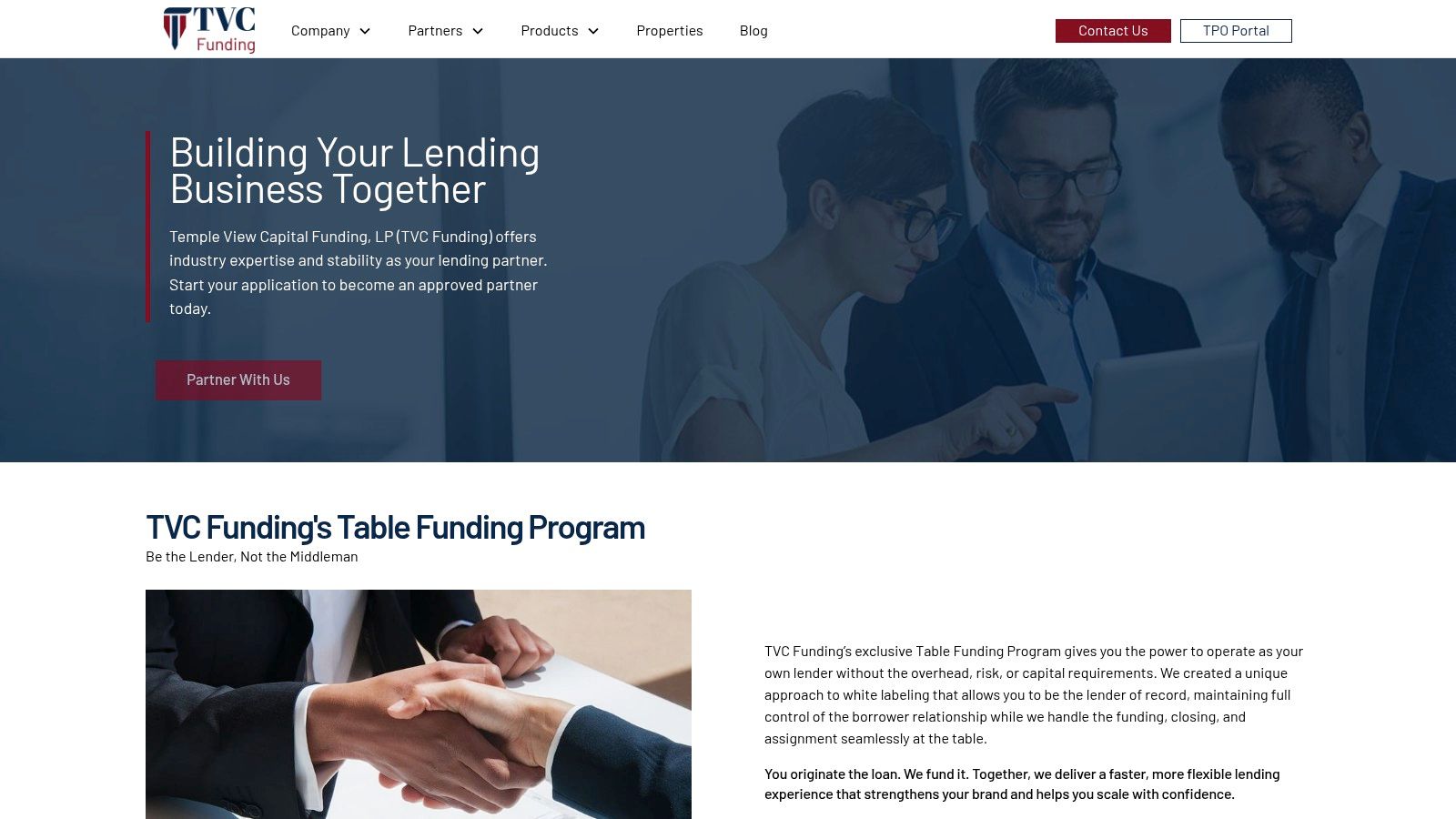
Temple View Capital fits borrowers who want ARV-based underwriting paired with a documented draw process. Its programs cover fix-and-flip, bridge, DSCR rental, and ground-up construction loans. Published guidance includes up to 90% LTV, approximately 75% LTARV, and 100% rehab financing, subject to complete underwriting and the specific property file, as stated in its business-purpose loan programs.
The range of loan sizes extends from roughly $75,000 to multimillion-dollar facilities. That breadth can support both smaller residential deals and larger operators, but the published range says little about your actual approval. The lender will still evaluate the collateral, ARV, renovation budget, borrower liquidity, and exit.
Draw mechanics are part of the loan economics
Temple View's draw administration materials and FAQs give borrowers more visibility into the funding process. That matters because a delayed draw can force you to use personal cash, pause contractors, or extend the project. Experienced borrowers may benefit from advanced draw administration, while newer operators may face lower borrowing power or larger reserves.
The lender's recent strategic capital partnership is intended to strengthen funding durability for larger operators. Treat that as a capital-platform consideration, not as a substitute for reviewing your loan documents. Published terms are non-binding, and the final structure can include different pricing, covenants, guarantees, or reserve requirements.
Use Temple View when the ARV cap and draw process match your construction schedule. Before closing, ask how quickly inspections are scheduled, what documentation each draw requires, and whether interest applies to the full commitment or only funded amounts.
A strong Temple View file includes:
- Comparable sales: Recent, relevant evidence supporting the finished value.
- Repair scope: Line items that match the contractor plan and lender budget review.
- Exit plan: A sale or refinance path that still works if the timeline slips.
- Liquidity proof: Cash available for gaps, carry, and unplanned work.
Temple View may suit a borrower who needs construction funding and clear draw administration. It won't make an aggressive ARV or thin-margin project safe.
Top 7 Hard Money Lenders Comparison
| Lender | Implementation (🔄) | Resource requirements (⚡) | Expected outcomes (📊) | Ideal use cases (💡) | Key advantages (⭐) |
|---|---|---|---|---|---|
| Kiavi (formerly LendingHome) | 🔄 Low, online-first, streamlined underwriting | ⚡ Moderate, documentation + investor track record favored | 📊 Fast closings (~10 business days), predictable draw cadence | 💡 Repeat fix-and-flip, bridge, ARV-driven rehab operators | ⭐ Fast online quotes, multi-state capacity, efficient draws |
| Lima One Capital | 🔄 Medium, multiple program menus and institutional workflow | ⚡ Moderate–High, portfolio operators benefit; conversion docs | 📊 Flexible conversion to DSCR; supports portfolio scaling | 💡 New & experienced investors, Fix2Rent, multi-project operators | ⭐ Broad program lineup, Fix2Rent paths, LOC options |
| CoreVest | 🔄 Medium, institutional underwriting with borrower portal | ⚡ High, higher FICO/docs required for top leverage tiers | 📊 High leverage ceilings and fast approvals for qualified files | 💡 Volume operators, portfolio aggregation, build-to-rent | ⭐ Capital stability, lines/aggregation, national reach |
| RCN Capital | 🔄 Medium, ARV-based matrices and tiered pricing | ⚡ Moderate, stronger track record unlocks better terms | 📊 Transparent ARV caps; potential for high purchase+rehab financing | 💡 Experienced flippers needing ARV-driven financing | ⭐ Clear program matrices, published tiers, broker/direct channels |
| CIVIC Financial Services (Roc360) | 🔄 Medium, platform-backed origination and servicing tools | ⚡ Moderate, term sheet needed; review full-recourse covenants | 📊 Broad product set supporting flip-to-rent and construction | 💡 Investors operating across markets seeking institutional backing | ⭐ Roc360 platform support, flip-to-rent pathways |
| Asset Based Lending (ABL) | 🔄 Low–Medium, direct balance-sheet lender with published specs | ⚡ Moderate, best pricing for experienced borrowers with liquidity | 📊 Clear parameters; supports DSCR takeout post-stabilization | 💡 Experienced operators, new construction, bridge-to-rent | ⭐ Published specs, straightforward underwriting, high rehab coverage |
| Temple View Capital | 🔄 Medium, ARV caps and advanced draw administration | ⚡ Moderate–High, larger facilities and reserve requirements possible | 📊 Transparent draw processes; strengthened funding durability via partnership | 💡 Larger operators needing advanced draw admin and varied loan sizes | ⭐ Capital partnership (Oaktree), transparent draw administration, wide loan sizes |
Match the Lender to the Deal Before You Sign
The best hard money loans are deal-specific. A lender with a fast digital process may fit a standard cosmetic renovation. A lender with bridge-to-DSCR options may fit a property where the resale exit is uncertain. A lender with high published LTV may reduce the cash needed at closing, but that benefit disappears if the ARV is unsupported, draws arrive late, or the maturity expires before the sale or refinance.
Start with the same underwriting package for every shortlisted lender. Include the purchase price, current value, ARV, itemized rehab estimate, MAO, projected resale or rental exit, and available liquidity. Then ask each lender to apply its current program matrix to the same facts. That's the only reliable way to compare a national institutional lender with a direct balance-sheet lender or a more specialized program.
Your final review should cover:
- Current term sheet: Request written pricing, points, fees, borrowing capacity, reserves, maturity, and extension terms.
- Applicable program matrix: Confirm the ARV caps and borrowing limits for your market, property type, and experience level.
- Total project cost: Include interest, points, inspections, legal charges, draw fees, extension pricing, taxes, insurance, utilities, and selling costs.
- Draw timing: Ask when funds are released and whether interest accrues on the full commitment or only on drawn rehab funds.
- Downside case: Rerun the deal with a lower resale value, a longer hold, higher repairs, and a delayed refinance.
- Exit certainty: Confirm the sale or DSCR refinance path before you depend on a balloon payoff.
Industry summaries commonly place hard money terms around 6–24 months, with annual rates around 8%–15% and origination charges around 2–5 points. A point equals 1% of the original principal, so the fee can be significant even when the interest rate looks competitive. These market ranges are summarized by Lender Ledger's hard money glossary, but your signed term sheet controls.
Consider the carrying-cost math before you celebrate a high approval. On a $300,000 loan at 12%, interest-only payments are about $3,000 per month, and a 3-point origination charge adds $9,000 at closing. Over a six-month project, scheduled interest would be approximately $18,000, before extension, legal, appraisal, inspection, and draw costs. The example shows why the cheapest headline rate may not produce the best financing result.
Your decision should preserve equity after all-in costs. Recalculate the ARV, rehab estimate, and MAO immediately before signing, then compare the updated figures with the lender's valuation and conditions. PropLab can organize those figures into an offer-ready analysis, but you should reconcile its outputs with the lender's title, insurance, appraisal, and property-condition requirements.
PropLab helps investors calculate ARV, estimate renovation costs, and produce a MAO-based deal report in about 60 seconds. Use the analysis to compare lender leverage, rehab funding, and exit assumptions before you commit, then visit PropLab to evaluate your next flip.
About the Author
P
PropLab Team
Real Estate Analysis Experts
The PropLab team consists of experienced real estate investors, data scientists, and software engineers dedicated to helping investors make smarter decisions with AI-powered analysis tools.
Free tool
Get the ARV of any property in 30 seconds
Skip the spreadsheet. Enter an address and get an after-repair value backed by real comps.
