General
Best Fix and Flip Software in 2026: 7 Tools Compared
November 4, 2026
14 min read

A deal lands on your desk at 4 p.m., and the seller wants an answer by morning. You've got an address, listing photos, and a repair estimate that seems light. A spreadsheet can calculate your offer, but it won't pick defensible comps, spot a mismatched renovation scope, or explain your assumptions to a lender.
That's why investors look for fix and flip software that connects the address to an offer, rather than another calculator. The need is practical: ATTOM's annual flipping report put the typical gross flipping return at 29.6% in 2024, before renovation, financing, holding, and selling expenses.
The right tool depends on where you're getting stuck. An underwriter helps establish ARV and maximum allowable offer, or MAO. A rehab platform handles budgets and execution; a specialist such as Exayard construction estimating software belongs in the estimating conversation, not automatically in the valuation seat. These seven options earn their place at different points along that path.
1. PropLab
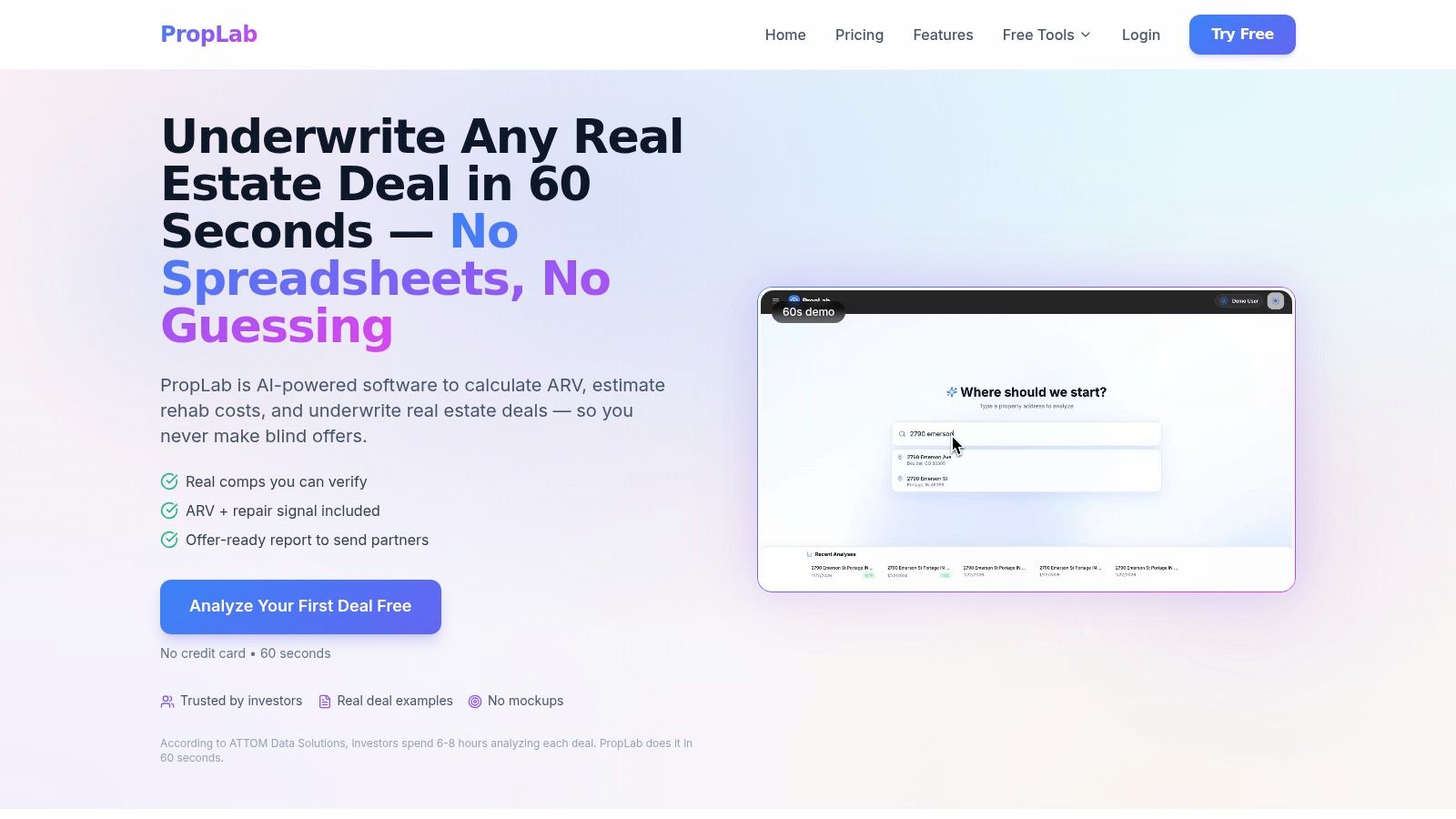
PropLab fits the address-to-offer stage. Paste an address or property link, and our platform builds an underwriting report with comps, ARV, rehab estimates, expenses, risk indicators, and exit strategies in about 60 seconds. You don't need MLS access, which makes it accessible to investors who otherwise depend on an agent for initial comp research.
The useful part isn't just getting an ARV. Our comps include distance and recency weighting, adjustment breakdowns, and confidence scoring, so you can review why a sale belongs in the analysis. Nationwide coverage doesn't mean equally strong evidence everywhere, though. Sparse sales, unusual properties, and major condition differences still require local judgment.
From valuation to an offer you can explain
Our Max Offer Price uses ARV minus repairs with a built-in profit margin. Treat that output as a starting point for your acquisition decision, then verify financing, selling expenses, and the holding period against your actual deal terms.
- Repair budget: Our Rehab Cost Calculator produces a line-item budget with contingency. Replace preliminary allowances with contractor bids before committing.
- Lender package: Professional PDFs include comps, adjustments, and calculations, with sharing options for partners and lenders.
- Subscription fit: Our Plus plan costs $34.92 per month, billed at $419.00 yearly, and includes 50 analyses per month, PDF sharing, and side-by-side deal comparison.
Where it stops helping: An offer-ready report isn't a site inspection, contractor commitment, or lender approval. A confidence score helps you decide what to investigate; it doesn't remove the need to investigate.
I'd prioritize reviewing the closest competing renovated sales and checking whether your planned finish level matches them. A polished report built around the wrong renovation standard can still support the wrong offer.
Best-fit verdict: A solo flipper, wholesaler-turned-flipper, or acquisitions team that needs fast, reviewable underwriting and a package to send to a funding partner.
2. DealCheck
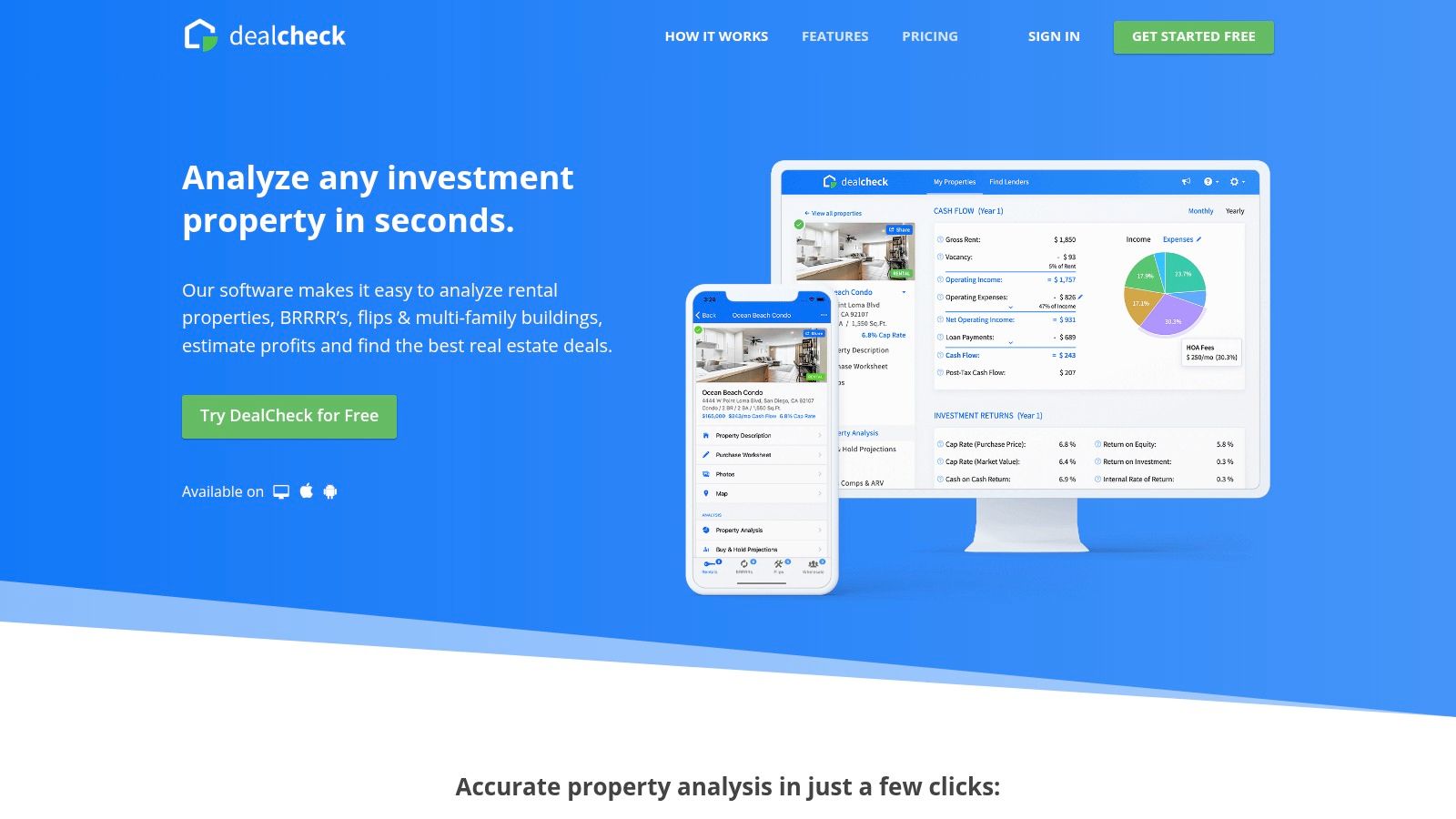
Sometimes the question isn't whether to buy. It's whether to flip, refinance, or hold. DealCheck is useful when you want to compare those paths without rebuilding your analysis in separate spreadsheets.
The platform supports flip, rental, BRRRR, multifamily, and commercial analysis, along with sales and rental comps, valuation inputs, offer calculations, and shareable reports. Web and mobile access make it practical for updating assumptions after a walkthrough rather than waiting until you're back at your desk.
A rental fallback only counts if it works with realistic debt payments, operating expenses, and cash left in the property.
Strong at scenario math, lighter after closing
DealCheck's strength is translating assumptions into an investment decision. Enter the acquisition terms, repairs, holding costs, and resale expectations, then inspect the resulting profit and returns. Interactive and PDF reports also help you explain those assumptions to a partner.
Its free Starter plan makes it approachable for initial screening, but saved-property, comp, photo, and template limits matter when evaluating the subscription tiers. Don't choose a plan solely because the calculator is available; check whether you can retain and share the supporting work you need.
Where it stops helping: This is primarily underwriting and reporting software, not a renovation command center. You'll still need a process for contractor coordination, change orders, and actual expenses. The comparison of DealCheck alternatives is useful when deciding whether you need deeper underwriting or a broader workflow.
Best-fit verdict: A budget-conscious solo investor who evaluates both flips and rentals and already has a separate renovation-management process.
3. FlipperForce
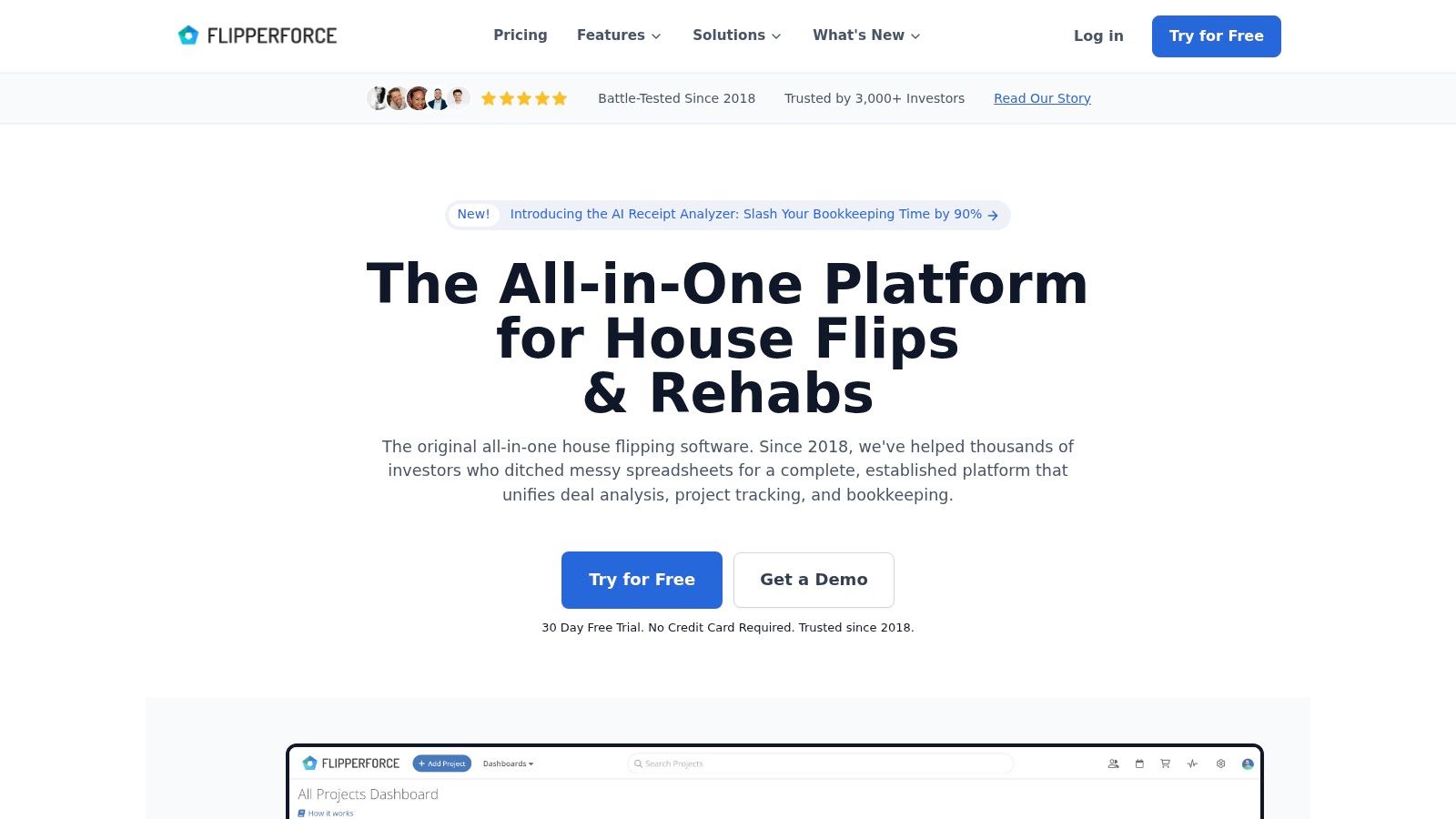
The roof bid changes after closing. Does your projected profit change with it, or does the old repair allowance remain in a spreadsheet nobody updates? That handoff between underwriting and construction is where FlipperForce makes sense.
It combines deal analysis and maximum-purchase-price calculations with repair estimating, scopes of work, schedules, expense tracking, and project reporting. Instead of treating the rehab estimate as a disposable acquisition document, you can use it as the starting budget for execution.
- Before purchase: Build an itemized scope and estimate, then use the repair total in your acquisition analysis.
- During renovation: Track schedules, milestones, and expenses against the project budget.
- Across projects: Reuse estimate and schedule templates, while updating pricing for the property and local contractor market.
Better control requires better inputs
The customizable repair-pricing database is useful when you repeat similar scopes. It's less useful if you copy yesterday's unit costs into a materially different project without reviewing quantities, access, demolition, or finish specifications.
Where it stops helping: Software can flag budget variance, but someone still has to enter invoices, approve changes, and revise forecasts. It also won't replace local bids or uncover concealed damage from listing photos.
Compared with a lightweight underwriting app, setup is more involved. That effort makes sense if you'll maintain the project records; it's unnecessary overhead if you only want a quick go-or-no-go calculation. Analysis-only and broader plans let you choose how much workflow you need.
Best-fit verdict: An active flipper managing renovations who wants the original acquisition budget and actual construction spending in the same system.
4. Rehab Valuator
A lender needs more than your resale target. They need to understand the purchase, renovation scope, funding request, and repayment plan. Rehab Valuator is worth considering when presenting the deal is nearly as important as calculating it.
Its address-based analysis retrieves comparable sales to help estimate ARV and calculates an offer using your cost assumptions. It also supports rental comparisons, BRRRR and development analysis, funding presentations, and concise lender proposals. Paid tiers extend into rehab estimating and project workflows.
Funding rule: Make the scope, budget, and proposed draw schedule describe the same project before you send the package.
A presentation tool doesn't validate the budget
The distinction between gross spread and usable profit matters here. ATTOM's first-quarter flipping report explicitly excludes rehabilitation and other expenses from its gross-profit calculation, so a healthy-looking spread isn't enough to support a funding request.
Start with a scope that identifies what's being repaired, replaced, or left alone. Use the construction cost estimator guide to organize that budget, and distinguish inspection findings from contractor pricing when estimating home inspection repair costs.
Where it stops helping: Neither comp retrieval nor a professional proposal proves that the finished property will achieve your ARV. The free Lite tier focuses on basic analysis; broader rehab and workflow features require a paid plan. Verify the scope and local sales before treating the report as offer support.
Best-fit verdict: A flipper raising private capital or working with a lender who wants a clear acquisition narrative and organized construction funding materials.
5. PropStream
If your biggest problem is finding properties worth underwriting, a better report generator won't solve it. PropStream starts upstream of the offer, with nationwide property research, seller-oriented filters, and lead discovery.
You can search a target geography, narrow the property pool, review ownership and market information, examine comparable sales, and then use its Fix & Flip Analyzer and rehab calculator. Mobile search and drive-for-dollars tools also support investors who source properties in the field.
Useful from lead list to initial underwriting
The advantage is continuity. You don't have to treat prospecting and initial property evaluation as completely separate jobs.
- Address discovery: Use property and seller filters to build a more relevant prospect list.
- ARV review: Examine comps drawn from MLS sales data, public records, or a combination.
- Initial offer math: Use the flip and rehab calculators to decide which leads deserve a walkthrough and deeper analysis.
Where it stops helping: A filtered lead isn't a motivated seller, and a property record isn't a condition assessment. Separate what the platform reports from what you've confirmed through conversation, inspection, and current market evidence.
PropStream's broader feature set makes more sense for ongoing acquisitions than occasional deal analysis. Before subscribing, compare the included usage allowances with your actual prospecting needs; the PropStream free-trial guide can help you plan what to test rather than browsing without a purpose.
I'd test it on a neighborhood you already understand. Review whether the search results, records, and comp choices help you identify better candidates, not merely more addresses.
Best-fit verdict: A wholesaler-turned-flipper or acquisitions team that sources its own opportunities and needs property intelligence before detailed underwriting.
6. REIPro

REIPro is for investors whose deals get lost between sourcing, follow-up, and analysis. The platform combines property records, lead sources, comparable sales, deal analysis, marketing, and contact management within a guided workflow.
That breadth matters when the next action is unclear. A seller conversation should produce a follow-up task or an underwriting decision, not another note in someone's phone. Keeping the contact history and property evaluation together can make that handoff easier to manage.
Keep the seller's asking price, your current offer ceiling, and the next follow-up action distinct. They answer different questions.
Judge the workflow, not the feature count
REIPro's direct mail, skip tracing, buyer/contact CRM, and education resources extend beyond the calculator stage. They're useful if you need an operating process, but potentially redundant if your team already maintains a dependable CRM and marketing stack.
There's a genuine adoption gap to consider: the WMRE investor survey found that 44% of respondents used an investor CRM in 2021. That historical finding doesn't prove any particular platform performs better; it supports checking whether your own pipeline still depends on disconnected records.
Where it stops helping: An organized acquisition process doesn't establish a reliable repair scope or guarantee a profitable resale. You still need local valuation checks, contractor pricing, and a construction-control process.
During evaluation, move a sample lead through research, follow-up, analysis, and offer preparation. If staff must duplicate the same information elsewhere, account for that work before committing.
Best-fit verdict: A small investment operation that needs guided acquisition workflows and marketing follow-up more than a standalone flip calculator.
7. Flipster

A lead looks promising, but the numbers still have to hold up after repairs, financing, and resale costs. Flipster combines seller and buyer leads with comps, deal analysis, offer tools, rehab tracking, and lender connections. Its main appeal is keeping prospecting and transaction tasks in one workflow.
That combination may suit a wholesaler starting to keep some properties as flips. The acquisition decision then depends on more than the assignment spread: renovation risk, financing carry, and resale execution all need consideration.
Broad coverage, with boundaries to test
Flipster includes lead stacking, offer-price calculations, contract tools, rehab checklists, budget tracking, and contractor-management features. Training materials support users learning the workflow, and cloud access lets them work away from a fixed office.
- Address and offer: Check whether the lead information and comparable sales give you enough support to set a defensible offer.
- Repair budget: Confirm that the checklists, budget tracking, and contractor tools match the level of detail your projects need.
- Lender handoff: Treat lender-network access as a starting point for making connections, not a financing commitment.
Where it stops helping: A broad bundle doesn't guarantee equal depth across underwriting and renovation management. Review those workflows separately, especially if a project includes substantial structural or mechanical work. Confirm which outreach channels the current plan includes before relying on a particular channel.
Success stories published by a vendor aren't independent performance validation. Compare the analysis and rehab tools against your own process, and check whether the product covers gaps you have. If sourcing and transaction organization are already handled elsewhere, a focused underwriter or rehab manager may be a better fit.
Best-fit verdict: A wholesaler-turned-flipper who wants lead generation, offer preparation, and basic rehab coordination in one platform.
How the Seven Fix and Flip Tools Compare at a Glance
The right comparison follows the deal: screen a property, check its value and repair budget, set an offer ceiling, then prepare the financing handoff. This table shows where each tool can help and where its listed output stops short.
| Tool | Starting Price | Free Option | Best For | Rehab Budgeting | Lender-Ready Output |
|---|---|---|---|---|---|
| PropLab | Plus: $34.92/month, or $419.00 billed yearly | Free calculators, no account required | Fast underwriting and deal screening | Repair estimates and repair-based offer calculations | Professional PDF reports with a shareable link, in lender-ready format |
| DealCheck | Not provided here | Free Starter plan | Screening flips and other investment strategies | Rehab cost estimates | Interactive and branded PDF reports |
| FlipperForce | Not provided here | Trial terms not provided here | Flippers managing analysis and renovation work | Estimates, budgets, schedules, and expense tracking | Project reports |
| Rehab Valuator | Not provided here | Free Lite tier | Investors preparing funding requests | Rehab estimates and project-management tools on paid tiers | Funding presentations and one-page lender proposals |
| PropStream | Not provided here | Trial terms not provided here | Acquisitions teams and wholesalers sourcing deals | Fix-and-flip analyzer and rehab calculator | No lender-ready output listed here |
| REIPro | Not provided here | Trial terms not provided here | Investors managing prospecting through follow-up | Deal analysis | No lender-ready output listed here |
| Flipster | Not provided here | No free option listed here | Investors combining lead generation with deal workflows | Rehab budget tracking, contractor management, and checklists | Lender-network access; report format not specified |
PropLab's listed workflow runs from property screening through an offer-ready report. Other tools in the table emphasize different parts of the job, such as renovation tracking, lead sourcing, or funding presentations. A feature listed for one stage does not establish that the tool covers every step that follows.
Match the Tool to Your Deal Volume and Exit Plan
Start with the workflow you struggle with most. If you need a fast, defensible offer number, begin with an underwriting-focused tool and test it on three recent deals against your own comps. Use properties you understand, including one you rejected, so you can assess whether the software exposes the reasons behind your decision.
If renovation spending is the problem, prioritize scopes, committed costs, change orders, and budget-versus-actual tracking. If the pipeline is thin, prioritize sourcing and follow-up. Buying a broader platform won't help unless someone maintains the information after the initial analysis.
Test the handoff as carefully as the calculation
A useful trial should show what happens when an assumption changes. Replace the preliminary roof allowance with a contractor bid, extend the holding period, or remove a weak comp. Then inspect the revised offer ceiling and the report your partner receives.
- For solo flippers: Favor reviewable assumptions and low administrative effort over features you won't maintain.
- For acquisitions teams: Check that everyone can identify the current valuation, offer ceiling, and supporting evidence.
- For lender-facing deals: Keep comp adjustments, repair scope, expenses, and funding assumptions consistent throughout the package.
Your exit plan deserves the same scrutiny. A comp-supported ARV doesn't guarantee a quick sale, and converting to a rental isn't automatically a safe fallback. Test the carrying costs and rental economics before acquisition, not after a listing stalls.
Our free ARV, Rehab Cost, and Fix and Flip calculators require no account, so you can compare outputs side by side before paying for software. The Fix and Flip Calculator shows profit, cash needed, and ROI; use those outputs alongside your own cost assumptions, not instead of them. Choose the platform that helps you make and maintain a defensible decision through the point where you currently lose control.
PropLab turns an address into comps, ARV, rehab estimates, and an offer-ready report you can review and share with partners or lenders. Visit PropLab, analyze a property you already know, and compare the comp adjustments and Max Offer Price with your own underwriting before using it on your next offer.
About the Author
P
PropLab Team
Real Estate Analysis Experts
The PropLab team consists of experienced real estate investors, data scientists, and software engineers dedicated to helping investors make smarter decisions with AI-powered analysis tools.
Free tool
Stop guessing rehab costs
Get a line-item renovation estimate from the property details — no contractor walkthrough needed.
