Real Estate Investing
Fix and Flip vs Buy and Hold: Which Strategy Wins?
November 14, 2025
14 min read
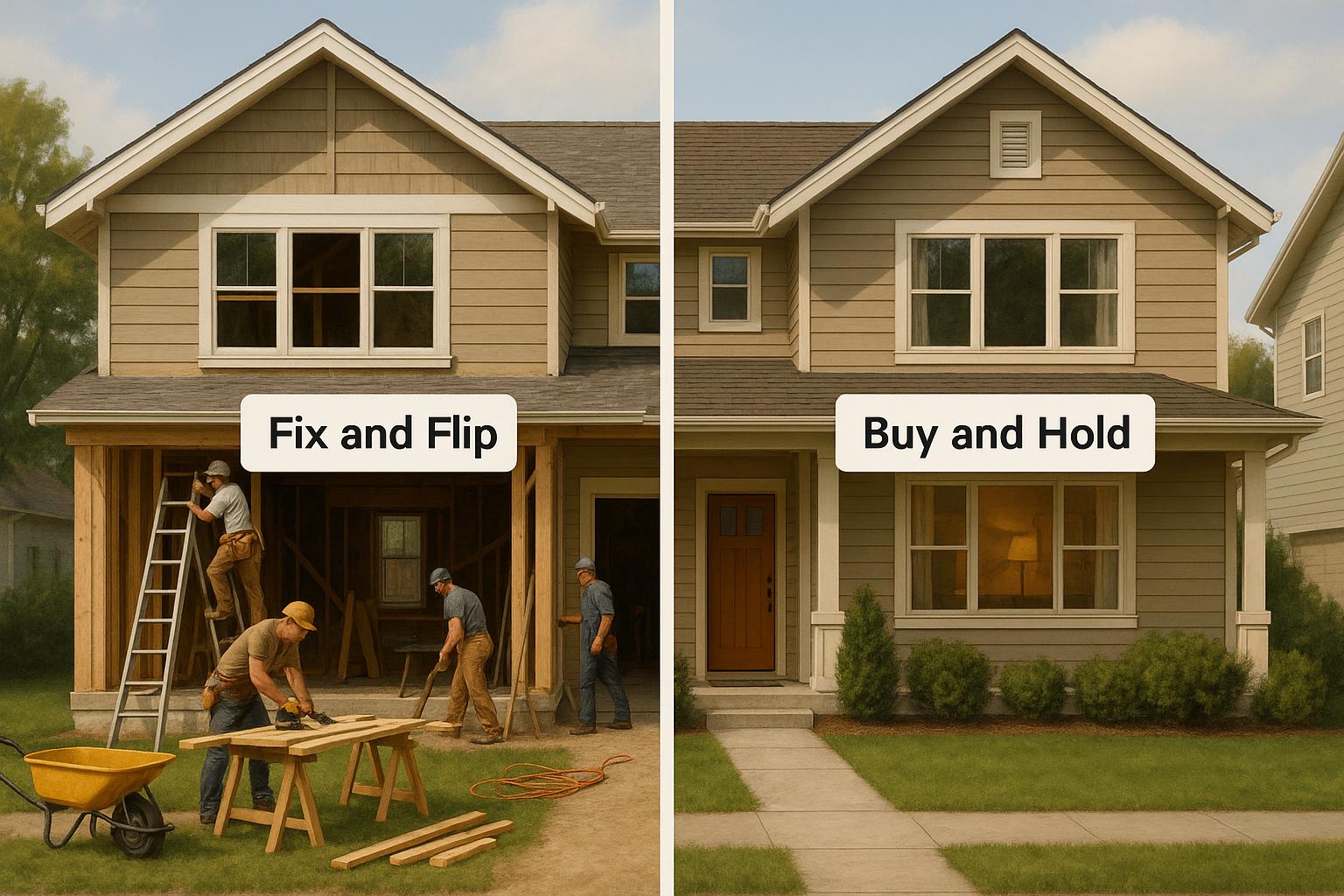
Fix and Flip and Buy and Hold are two popular real estate investment strategies, each with distinct goals, risks, and timelines. Here's the breakdown:
- Fix and Flip: Short-term strategy focused on buying undervalued properties, renovating them, and selling for profit within months. High risk, high reward.
- Buy and Hold: Long-term strategy aimed at generating rental income and benefiting from property appreciation over years. Lower risk, steady growth.
Key Differences:
- Timeline: Fix and Flip is fast-paced (6–12 months), while Buy and Hold spans years or decades.
- Income: Fix and Flip provides one-time profits; Buy and Hold offers consistent rental income.
- Risk: Fix and Flip faces market volatility and renovation issues; Buy and Hold deals with tenant management and market shifts.
- Capital: Both require significant upfront investment, but Fix and Flip often needs quick financing.
Quick Comparison
| Factor | Fix and Flip | Buy and Hold |
|---|---|---|
| Timeline | Months (Short-term) | Years (Long-term) |
| Income Type | One-time profit | Regular rental income |
| Risk | High (market/renovation risks) | Moderate (tenant/market risks) |
| Capital Needed | High (purchase + renovations) | High (down payment + upkeep) |
| Skills Required | Renovation/project management | Property/tenant management |
The best choice depends on your financial goals, risk tolerance, and time commitment. Fix and Flip suits those seeking quick returns and hands-on projects, while Buy and Hold is ideal for steady income and long-term wealth.
Fix & Flip vs. Buy & Hold: Which Strategy Works Best for You?
Fix and Flip: High Risk, High Reward
The fix-and-flip strategy can deliver quick profits, but it requires a solid grasp of the real estate market, enough capital to cover costs, and a willingness to take on risk. While the potential for high returns exists, investors must be prepared for market shifts and unexpected challenges.
How Fix and Flip Works
Typically, a fix-and-flip project takes between 6–8 months from purchase to sale, though experienced investors might wrap up in as little as 3–6 months. To succeed, every phase of the process must be handled efficiently, with a sharp focus on cost management.
Market Research and Goal Setting:
Every successful flip starts with research. It’s essential to analyze housing trends, property values, and economic conditions. Clearly defining profit goals is equally important.
Financial Assessment and Funding:
Budgeting is critical. Account for purchase costs, renovations, carrying expenses, and selling fees. Always include a 20% contingency for unexpected costs. If needed, consider hard money or private loans for funding.
Property Acquisition:
Look for undervalued or distressed properties that show strong profit potential. The purchase price, combined with renovation costs, should leave enough room for a solid profit.
Renovation and Project Management:
Focus on upgrades that add value to the property while keeping expenses under control.
Marketing and Sale:
An effective marketing strategy is key to reaching the right buyers and achieving your desired returns.
The pros and cons of this approach highlight the balance between its rewards and challenges.
Fix and Flip Pros and Cons
Before diving into fix-and-flip investing, it’s essential to weigh the benefits and risks to see if this strategy aligns with your goals.
| Advantages | Disadvantages |
|---|---|
| Quick Returns: Potential to earn profits within 6–8 months | High Risk: Market changes can shrink profit margins quickly |
| Active Income: Median profits of $73,500 per property in 2024 | Renovation Delays: Unforeseen issues can extend timelines and increase costs |
| Capital Liquidity: Investments can be turned into cash relatively fast | Carrying Costs: Expenses like interest, utilities, and insurance add up during the renovation period |
| Market Opportunity: Flips make up 7.5% of all home sales | Market Volatility: Economic shifts can impact the ability to sell |
| Skill Development: Learn valuable real estate and construction skills |
Although house flipping once delivered average returns of 50%, that figure has dropped to around 30% today.
Tools and Skills Needed for Fix and Flip Success
To navigate the challenges of this strategy, developing the right skills and using the right tools is essential. First-time flippers often underestimate how complex these projects can be, leading to delays and higher costs.
Project Management and Financial Control:
You’ll need to coordinate contractors, stick to timelines, and closely monitor all expenses. This includes carrying costs like property taxes, insurance, utilities, and loan payments throughout the project.
Team Building:
A dependable team is critical. This should include a real estate attorney, lender, contractor, and agent.
Market Analysis Tools:
Investors rely on tools to estimate property values, calculate renovation costs, and identify promising deals. In today’s unpredictable market, having access to real-time data is a game-changer. Platforms like PropLab provide the insights needed to make informed decisions.
Ongoing Market Assessment:
The CREMA Principle emphasizes the importance of staying on top of local market trends. Conditions can shift during a project, and being able to adjust pricing and strategies is key to staying competitive.
Buy and Hold: Building Long-Term Wealth
The buy-and-hold strategy is all about building wealth steadily over time through rental income and property appreciation. Unlike the fast-paced fix-and-flip method, this approach focuses on generating consistent, long-term income. While it requires patience, it offers the potential for dependable cash flow and financial growth over the years.
How Buy and Hold Works
This strategy involves purchasing properties to rent out, creating a steady stream of income while the property gains value over time. It's particularly suited for investors who are in it for the long haul.
Property Selection and Purchase:
The key is finding properties in areas with high rental demand - think neighborhoods with good schools, job opportunities, and community appeal. These properties usually need only routine upkeep, not the extensive renovations typical of fix-and-flip projects.
Tenant Management and Cash Flow:
A big part of the strategy is ensuring that rental income exceeds expenses like the mortgage, insurance, taxes, and maintenance. Positive cash flow not only provides a financial cushion but also helps manage unexpected costs or market fluctuations. Over time, this can allow investors to leverage equity for expanding their portfolio.
Long-Term Appreciation:
As properties increase in value over time, they contribute to wealth building. Additionally, tenants’ rent payments gradually reduce the mortgage balance, further boosting returns. This combination of appreciation and equity growth creates a foundation for expanding into more rental properties.
Portfolio Expansion:
Equity gained from one property can be used to finance new acquisitions, increasing both rental income and overall wealth.
Buy and Hold Pros and Cons
This strategy comes with its own set of benefits and challenges compared to the fix-and-flip approach.
| Advantages | Disadvantages |
|---|---|
| Regular Income: Rental payments provide steady cash flow | Tenant Challenges: Late payments, vacancies, and difficult tenants can disrupt income |
| Tax Perks: Deductions for expenses like depreciation and mortgage interest | Ongoing Management: Requires time and effort to handle repairs and tenant issues |
| Value Growth: Properties often appreciate over time | Market Risks: Economic downturns can lower property values and rental demand |
| Leverage Opportunities: Use financing to control valuable assets with less upfront capital | Liquidity Issues: Selling a property to access funds can take time |
| Inflation Protection: Rents tend to rise with inflation | Upfront Costs: Initial investments for down payments and repairs can be significant |
| Mortgage Reduction: Tenant payments help pay off the mortgage | Location Risks: Neighborhood decline can hurt rental income and property value |
To succeed, managing cash flow is crucial. Properties that generate positive cash flow from day one can help safeguard against unexpected expenses or market changes.
What You Need for Buy and Hold Success
Success with buy-and-hold investing depends more on planning and management than on renovation skills.
Financial Planning and Analysis:
It's essential to calculate rental income, operating expenses, and cash flow accurately. Guidelines like the 1% rule - where monthly rent should ideally be about 1% of the property’s purchase price - can provide a baseline for evaluating investments. While not universal, it’s a helpful tool for initial assessments.
Understanding Local Rental Markets:
Knowing local rental laws, tenant rights, and market conditions is critical. For example, some states have rent control laws, while others allow for more flexibility. Understanding these factors ensures you can price rentals effectively and avoid legal issues.
Property Management Skills:
Whether you manage properties yourself or hire a professional, key skills include tenant screening, drafting lease agreements, coordinating maintenance, and resolving disputes. Many investors start by managing their own properties to gain hands-on experience before expanding.
Reliable Market Data:
Good decisions rely on accurate information about rental rates, property values, and local trends. Market analysis tools can help identify promising opportunities and avoid costly mistakes.
Emergency Fund Management:
An emergency fund is a must for covering unexpected repairs or vacancy periods. Experienced investors often keep reserves to handle several months’ worth of expenses, including major repairs like replacing a roof or HVAC system.
sbb-itb-ef86070
Fix and Flip vs Buy and Hold: Direct Comparison
Now that we've broken down both strategies, let’s see how they stack up against each other based on key factors that can influence your investment journey. Deciding between fix-and-flip and buy-and-hold depends on what you want to achieve financially, how much time and money you can commit, and how much risk you're willing to take.
Comparison Table: Which Strategy Suits You?
Here’s a side-by-side look at the two strategies:
| Factor | Fix and Flip | Buy and Hold |
|---|---|---|
| Time Commitment | High (8/10) – Requires hands-on involvement, fast decision-making, and constant oversight during renovations. | Moderate (5/10) – Involves ongoing property management and tenant interactions, which can be delegated. |
| Capital Requirements | High (7/10) – Significant upfront costs for purchasing and renovating properties, often needing quick funding. | Moderate to High (6/10) – Requires a large down payment and ongoing expenses like taxes and maintenance. |
| Expertise Needed | High – Demands skills in market analysis, renovation budgeting, project management, and contractor coordination. | Moderate – Focuses on property management, tenant handling, and understanding long-term market trends. |
| Risk Profile | High – Prone to risks like unforeseen renovation expenses and market fluctuations. | Moderate – Risks include tenant issues and market changes, but generally more stable over time. |
This table highlights how fix-and-flip demands more active participation and upfront risk, while buy-and-hold offers a steadier, more long-term approach. Each strategy caters to different types of investors and goals.
When to Choose Fix and Flip vs Buy and Hold
Your choice between these strategies should reflect your skills, resources, and market outlook. Here’s a breakdown to help you decide:
Fix-and-Flip Might Be Right for You If:
- You have experience with renovations and a network of reliable contractors.
- You can commit to hands-on project management.
- You have access to quick financing options.
- You’re confident in estimating renovation costs and timelines accurately.
This strategy is ideal for investors who thrive in fast-paced, short-term projects and are comfortable taking on higher risks for potentially quicker returns.
Buy-and-Hold Might Be the Better Option If:
- You’re looking to build wealth gradually over time.
- You’re comfortable managing rental properties or can hire property managers.
- You want to benefit from tax advantages tied to long-term property ownership.
Market conditions play a big role in your decision. Fix-and-flip investments are more sensitive to immediate market trends, while buy-and-hold properties provide more stability and resilience in fluctuating markets.
Choose the approach that best fits your financial goals, time commitment, and comfort with risk.
Using PropLab for Better Investment Decisions

In the fast-paced world of real estate investing, making informed decisions quickly can make all the difference. PropLab is designed to help both fix-and-flip and buy-and-hold investors evaluate opportunities and risks with ease. By providing accurate data and analysis in just minutes, PropLab takes the uncertainty out of key investment decisions. It handles time-consuming tasks like researching comparable sales, estimating renovation costs, and calculating potential returns, so you can focus on closing deals. Let’s dive into how PropLab’s features support these two popular investment strategies.
PropLab Features That Help Fix and Flip Investors
For fix-and-flip investors, speed and precision are essential. PropLab’s ARV (After Repair Value) calculator uses comparable sales data to generate reliable estimates, helping you gauge a property’s post-renovation value. Its rehab cost estimator goes a step further, predicting renovation expenses based on the property’s condition and local market trends. This reduces the risk of unexpected budget overruns.
Another standout feature is PropLab’s ability to create professional PDF reports. These reports include financial projections, comparable sales data, and renovation estimates, making it easy to share information with lenders, partners, or contractors. This saves you hours of manual work. Plus, with a fair use limit of around 300 property scans per month, PropLab lets you analyze multiple deals without worrying about extra fees.
Now, let’s see how PropLab assists buy-and-hold investors.
PropLab Tools for Buy and Hold Investors
Buy-and-hold investors need tools that provide a clear picture of long-term profitability. PropLab offers detailed rental income analysis, factoring in comparable sales data to estimate potential rental earnings. It also considers ongoing costs like property taxes, insurance, and maintenance to deliver realistic net operating income projections.
The platform’s exit strategy optimizer is another key tool. It models various scenarios - such as selling after appreciation, refinancing to access equity, or holding the property for steady cash flow - allowing you to plan for maximum returns over time.
Why Real Estate Investors Need PropLab
PropLab not only saves time but also improves the accuracy of your investment analysis. Tasks that used to take hours can now be completed in minutes, enabling you to evaluate more opportunities and act quickly on the best ones. The platform also prioritizes security, using bank-level encryption to keep your financial data safe.
At $49 per month when billed annually, PropLab offers professional-grade tools at a fraction of the cost of hiring appraisers or consultants. The subscription includes future updates and email support, ensuring you always have access to the latest features.
With its fair use limit of roughly 300 property scans per month, PropLab is ideal for both active flippers who analyze multiple deals weekly and buy-and-hold investors looking for their next long-term asset. It even supports various investment strategies, including creative financing, making it a flexible tool for investors as their strategies evolve.
Conclusion: Choosing the Right Strategy for Your Investment Goals
When it comes to deciding between fixing and flipping or buying and holding, there’s no one-size-fits-all answer. The right approach depends on your personal goals, financial situation, and comfort with risk. Both strategies offer unique opportunities to build wealth through real estate, but they require different skill sets and mindsets.
Fix and flip is ideal for those looking for faster returns and who have the expertise to handle renovations and market fluctuations. This strategy demands active involvement, significant upfront capital, and a tolerance for higher risks. If you’re skilled in project management and have a reliable network of contractors, flipping properties can yield rewarding short-term profits.
On the other hand, buy and hold focuses on long-term wealth accumulation through passive income and property appreciation. While this approach requires patience and financial stability to handle ongoing costs like maintenance and vacancies, it offers consistent income and long-term equity growth. It’s a strategy that allows for less daily involvement, making it a good fit for those balancing other commitments.
Time commitment is another key difference. Flipping often requires full-time dedication, while buy-and-hold investments can complement other career or investment endeavors. Market conditions also play a role: in rapidly appreciating markets, both strategies can thrive, but buy and hold may provide more security over time. Meanwhile, in slower markets, skilled flippers might uncover opportunities that others overlook.
Regardless of your chosen path, success hinges on making informed decisions. Leveraging data-driven tools for property analysis, ARV calculations, and market insights can significantly improve your outcomes. Many seasoned investors eventually combine both strategies - using profits from flips to grow a buy-and-hold portfolio over time. This blended approach allows for flexibility and maximizes the potential of both methods as your experience and capital expand.
FAQs
How do I choose between fix-and-flip and buy-and-hold real estate strategies?
Choosing between fix-and-flip and buy-and-hold strategies comes down to your financial goals, risk tolerance, and the resources you have at hand. Both approaches offer unique advantages, but they cater to very different types of investors.
Fix-and-flip is geared toward those aiming for short-term gains. It involves purchasing properties, renovating them, and selling quickly for profit. On the other hand, buy-and-hold is better suited for long-term investors who want to build steady, passive income through rental properties.
Here are a few key points to weigh when deciding:
- Time commitment: Fix-and-flip requires intense focus and effort within a short timeframe, while buy-and-hold demands ongoing property management and tenant relations.
- Capital needs: Fix-and-flip typically involves higher upfront costs for property acquisition and renovations. Buy-and-hold, however, often allows for leveraging mortgages to spread out costs over time.
- Risk and taxes: Flipping comes with greater short-term risks, and profits are taxed as ordinary income. In contrast, holding properties can take advantage of depreciation benefits and lower long-term capital gains tax rates.
Take a close look at your local market conditions and your personal investment objectives to figure out which path aligns with your goals. Each strategy has its challenges and rewards, so the right choice depends on what fits your situation best.
What are the best ways to reduce risks in a fix-and-flip investment?
To reduce the risks involved in a fix-and-flip investment, start by diving deep into the local real estate market. Understand property values, neighborhood trends, and buyer preferences. Evaluate the renovation potential of the property carefully - this means identifying what upgrades will add the most value while keeping costs manageable.
Next, focus on financial planning. Create a budget that includes realistic cost estimates for everything from materials to labor. Don’t forget to set aside a contingency fund for those inevitable surprises that pop up during renovations.
Assemble a dependable team to help you through the process. This might include contractors, inspectors, and real estate agents who know their stuff. A strong team can save you time, money, and headaches. At the same time, think ahead about how you’ll market and sell the property once the work is done. A clear sales strategy can help you move the property quickly and avoid holding costs.
Finally, stay alert to shifts in the market. Trends can change, and being adaptable can make all the difference. With solid preparation, a trustworthy team, and a flexible game plan, you can keep risks in check and set yourself up for success.
What are the key skills and tools needed to succeed in buy-and-hold real estate investing?
To thrive in buy-and-hold real estate investing, you need to get a solid grip on local market trends, property values, and rental demand. Start by digging into the details - research neighborhoods that show promise for growth and find properties that fit your long-term financial objectives.
It’s also essential to get comfortable with cash flow analysis. This means making sure your investment produces consistent income. Tools like spreadsheets or property management software can make it easier to track your expenses and returns without getting overwhelmed. Don’t hesitate to connect with local real estate pros, like agents or property managers - they can offer insights that might help you make smarter decisions.
About the Author
P
PropLab Team
Real Estate Analysis Experts
The PropLab team consists of experienced real estate investors, data scientists, and software engineers dedicated to helping investors make smarter decisions with AI-powered analysis tools.
Free tool
Get the ARV of any property in 30 seconds
Skip the spreadsheet. Enter an address and get an after-repair value backed by real comps.