General
10 Portfolio Analysis Tools for Real Estate Investors
October 7, 2026
21 min read

A property lands in your inbox, and the clock starts. You need to screen the address, find credible comparable sales, estimate repairs, validate rent, structure an offer, and understand what the purchase does to your existing capital exposure. A spreadsheet can handle parts of that process, but it usually leaves the data scattered across browser tabs, notes, accounting software, and separate project files.
The best portfolio analysis tools don't all solve the same problem. Some are built for rapid underwriting, others for rental bookkeeping, lead generation, execution tracking, reporting, or short-term-rental intelligence. This comparison focuses on the job each platform performs in a real investor workflow, including its limitations, data-validation requirements, integration fit, pricing uncertainty, and strategy alignment.
A strong real estate portfolio workflow usually needs more than one layer. PropLab is the featured rapid-underwriting option, while Stessa and Baselane focus on financial visibility, PropStream and Privy support sourcing, Mashvisor and AirDNA help validate rental strategies, and FlipperForce tracks rehab execution. DealCheck and Zilculator sit closer to the offer and presentation stage.
1. PropLab
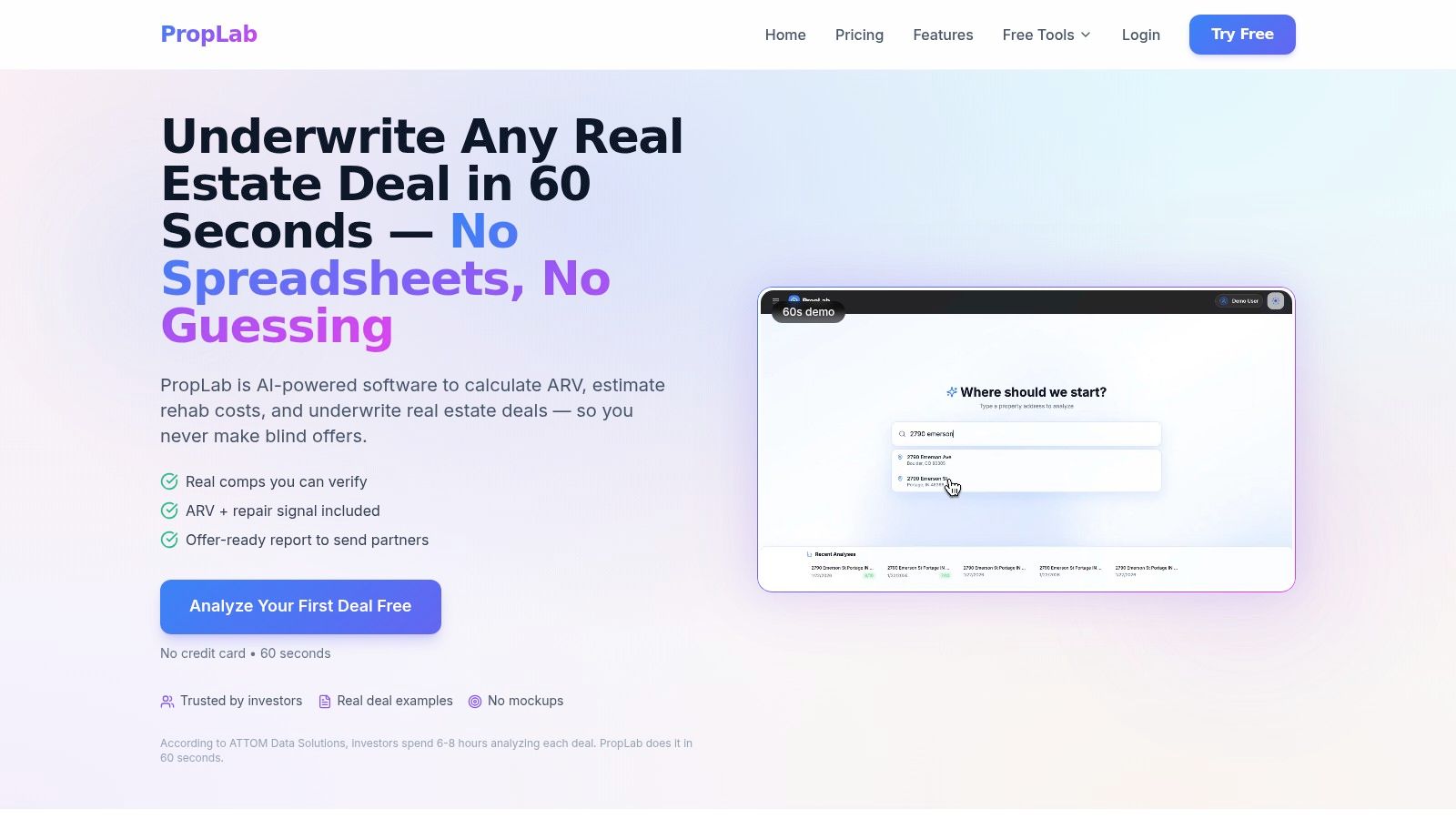
PropLab is designed for the moment when an investor needs to decide whether a property deserves an offer. Its AI-powered deal underwriter pulls public records, tax data, and market signals without requiring MLS access, then identifies relevant comparable sales, applies distance and recency weighting, and shows the adjustment logic behind the valuation. The result is a verifiable After Repair Value, or ARV, with confidence scoring rather than an unexplained headline number.
The workflow is unusually direct. Enter a property, review the comparable evidence, inspect condition indicators and red flags, check the rehab estimate, and use the calculated Max Offer Price, or MAO, as the starting point for negotiation. PropLab calculates MAO from ARV, repairs, and built-in profit margins, which makes it more useful for fix-and-flip, wholesale, and lending decisions than a generic property dashboard.
Where PropLab fits best
PropLab is strongest for acquisitions teams, flippers, wholesalers, buy-and-hold investors, and private lenders that need an offer-ready analysis quickly. Its Daily Deals scanner surfaces potential opportunities across 90+ major U.S. counties, giving investors a way to build a pipeline rather than analyze only properties they already know about. Reports can be exported as professional PDFs or shared as links with partners and lenders.
Users report ARV estimates landing within 3–5% of actual sale prices in most markets, and the platform states that it has analyzed over 10,000 deals. Those claims still need local verification, especially in thin or unusual markets. Public-record coverage varies, so field condition, recent renovations, permit status, and local agent knowledge remain essential checks.
Practical rule: Treat PropLab's confidence score as a reason to investigate assumptions, not as permission to skip inspection or comp validation.
Pricing is unusually easy to test. The free tier includes 3 analyses without a credit card. Basic costs $16.63 per month when billed yearly for 20 analyses per month, Plus costs $34.92 per month when billed yearly for 50 analyses, and Pro costs $49 per month for 150 analyses with advanced features. Pro also adds unlimited deal saving, contract generation, API access, Deal Finder credits, and permanent history. The right plan depends on volume, not just feature count.
Pros
- Fast underwriting: ARV, rehab estimates, MAO, and risk indicators arrive in about 60 seconds, according to the product materials at PropLab.
- Traceable comping: Distance and recency weighting, adjustment breakdowns, and confidence scoring make the valuation easier to defend.
- Offer-ready outputs: PDFs, shareable links, contract generation, and API access on higher tiers support lender and partner workflows.
- Pipeline support: The Daily Deals scanner complements property-by-property analysis.
- Clear limitations: The platform doesn't use MLS data, and low-density markets may require more manual validation.
2. Stessa
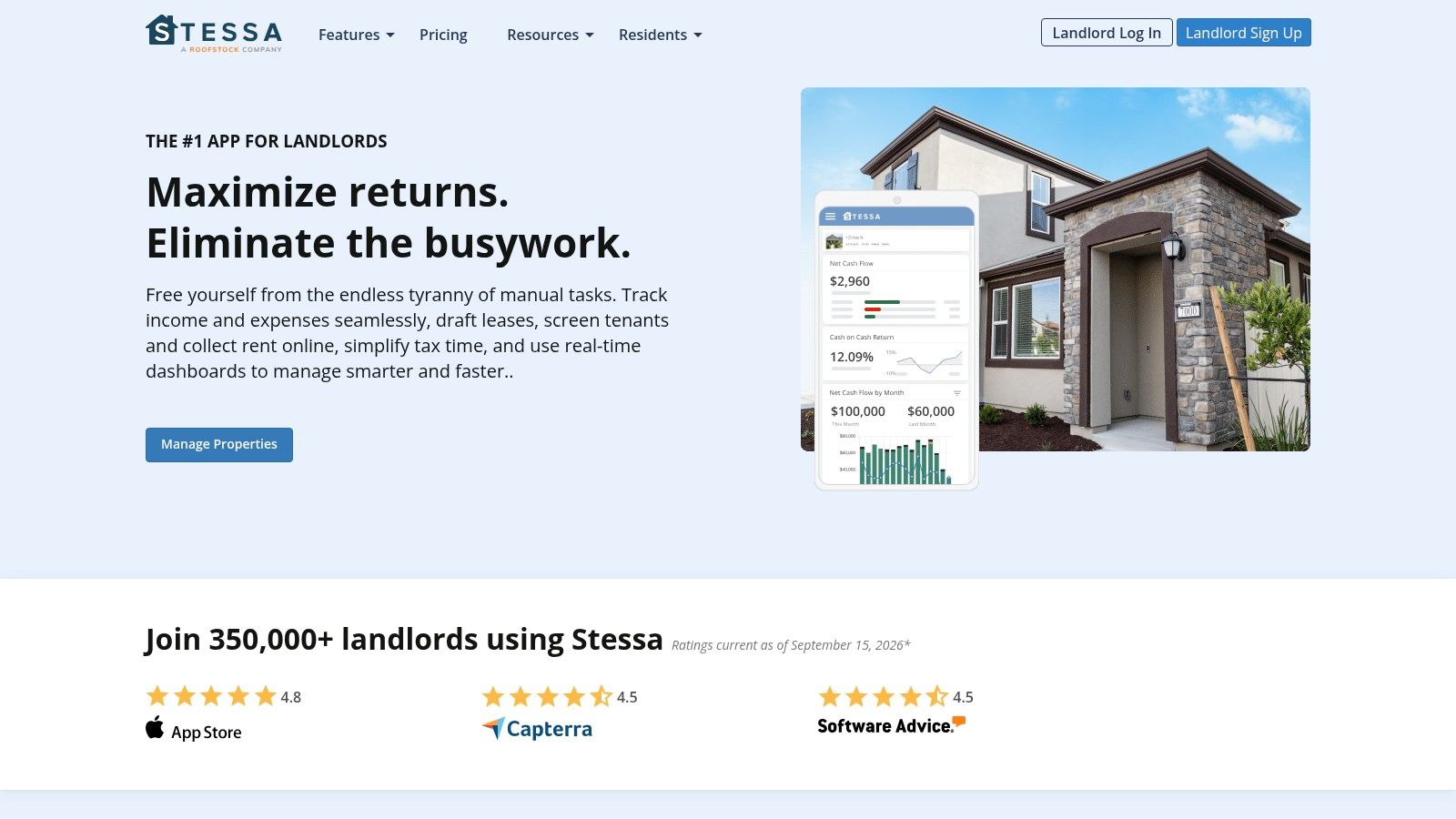
Stessa is built for what happens after acquisition, when the investor needs to understand whether the portfolio is producing the expected financial results. It combines automated bookkeeping, bank and credit-account feeds, transaction categorization, reporting, and dashboards that expose cash flow, net operating income, and net worth across properties.
That makes it a natural fit for buy-and-hold investors who have outgrown a collection of bank statements and manually maintained spreadsheets. Property-level drill-downs help identify which asset is absorbing cash, while portfolio views make it easier to review income, expenses, and performance together. Pro features add pro forma and budgeting capabilities, along with collaboration support and unlimited portfolios.
What it won't replace
Stessa isn't a complete property management platform. Leasing, maintenance coordination, and operational communication are lighter than in systems designed primarily for property managers. It also isn't the best first stop for deciding whether to buy a distressed property, because its value begins with organizing financial activity rather than discovering comps or estimating construction work.
Its reporting exports, including Schedule E reporting, are useful for investor and accountant conversations. Still, the accounting workflow should be tested against the way your CPA wants transactions categorized. Some accounting professionals may prefer QuickBooks or Xero as the formal ledger of record, with Stessa serving as the investor-facing operating layer.
Use Stessa when your main question is, “How is my rental portfolio performing?” Use another underwriting platform when the question is, “What should I offer for this property?” That distinction prevents investors from expecting one dashboard to handle acquisition analysis, bookkeeping, leasing, repairs, and tax accounting equally well.
3. Baselane
Baselane takes a different route from Stessa by putting banking and rent collection closer to the center of the landlord workflow. The platform combines integrated banking through a partner bank, rent collection, bookkeeping, and portfolio reporting, so rental income and property expenses can move through a more connected financial system.
That structure appeals to independent landlords and small rental portfolios that want fewer handoffs between the operating account, tenant payments, and performance reports. Property-level and portfolio-level cash-flow views help investors monitor income, expenses, NOI, rent rolls, and tenant ledgers without building those reports from scratch.

The financial layer is the product
Baselane's core banking and bookkeeping features are available without a monthly fee, while advanced capabilities use paid Smart features or add-ons. That can make the platform attractive during an early portfolio stage, but the total cost should be evaluated after adding the specific rent collection, banking, or reporting functions you need.
Baselane is less compelling if your priority is lead generation, detailed rehab management, or advanced property marketing. It can show the financial outcome of an investment, but it doesn't replace a dedicated acquisition database or construction management system. Investors should also confirm how the platform exports information to their accountant and whether its categorization conventions match existing books.
The strongest use case is a landlord who wants banking, rent collection, and portfolio visibility in one place. A flipper with short project cycles may get more value from a deal analyzer and rehab tracker, while a larger operator may need a fuller property management and accounting stack.
4. DealCheck
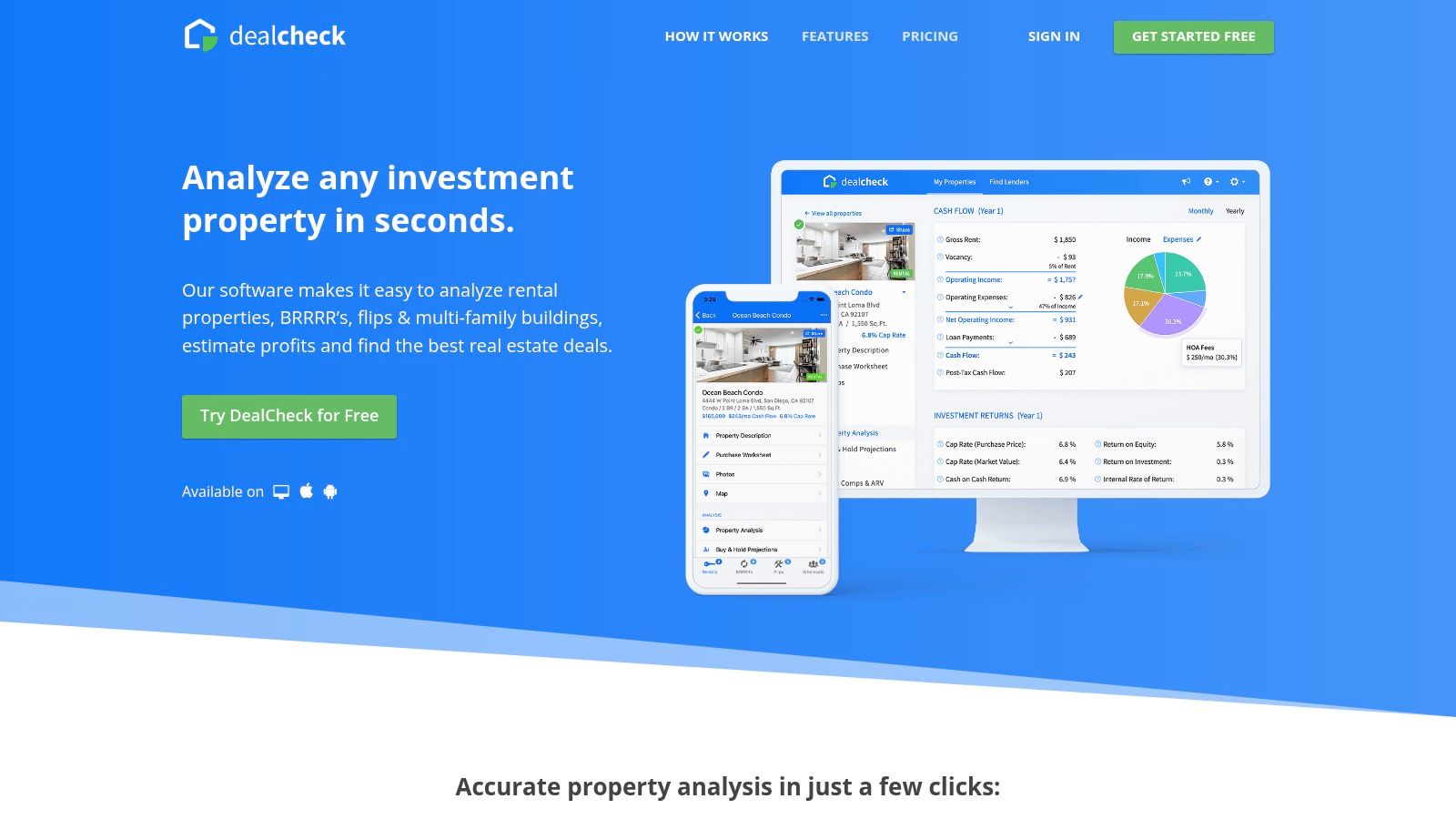
DealCheck is a practical underwriting tool for investors who want to compare strategies before making an offer. It supports rental, BRRRR, fix-and-flip, multifamily, and commercial calculations, then back-solves the MAO based on the investor's assumptions. That makes it useful for acquisitions teams that need a repeatable process rather than a one-off spreadsheet.
The platform is particularly effective when the same property could be approached in several ways. You can compare a flip with a rental or BRRRR scenario, change financing and exit assumptions, and package the result in a shareable web report or PDF. Mobile apps also make it suitable for investors who analyze properties away from a desk.
Best for repeatable offer decisions
DealCheck is fast to learn and focused on the calculations investors use. Refinance modeling and side-by-side scenarios strengthen its BRRRR and rental workflows, while comp and rental inputs give users a structure for documenting assumptions. The tool is also a sensible option when partners or lenders need a clean summary rather than access to an internal spreadsheet.
A polished report doesn't make an unverified rent estimate or comp set reliable.
Inputs still require judgment. Data imports may need manual cleanup, and local sale conditions, repairs, taxes, insurance, and financing terms should be checked independently. Some capabilities sit behind Plus or Pro tiers, so an active acquisition team should confirm which exports and scenario functions are included in the current plan.
Investors comparing it with other underwriting platforms may also find this analysis of DealCheck alternatives and real estate underwriting tools useful. DealCheck is strongest when the investor already has a candidate property and needs to model the offer. It is less of a lead-generation engine than PropStream or Privy.
5. PropStream
PropStream combines property intelligence with lead generation, making it a fit for investors whose portfolio growth depends on a consistent acquisition pipeline. It provides property and owner records, comparable sales, lien information, lead lists, rehab and ADU calculators, rental ROI tools, and fix-and-flip analysis.
That breadth matters to wholesalers, flippers, and acquisitions teams working with on-market and off-market opportunities. Instead of finding a lead in one system and moving it to another for initial analysis, users can research ownership, filter records, review comps, and estimate deal economics in the same environment.
Pipeline strength comes with complexity
PropStream's advantage is coverage and workflow breadth. Lead lists, skip tracing, and marketing campaign integrations can support outbound acquisition programs, while the calculators help users move from prospecting toward an initial offer decision. Tiered plans, trials, and lead credits provide multiple entry points, but the cost structure can rise as data volume and add-ons increase.
The platform has a learning curve because it serves several different jobs. A user who only needs rapid comping may find its lead-management features unnecessary, while a wholesaler may see those same capabilities as central to the business. Teams should map the fields they need into their CRM before committing, especially if lead status, owner data, and underwriting outputs must move between systems.
For investors evaluating alternatives, this guide to a PropStream free trial can help frame the testing process. Test searches in the exact counties where you buy. Data density, owner records, liens, and comp relevance can vary significantly by local market.
6. Privy
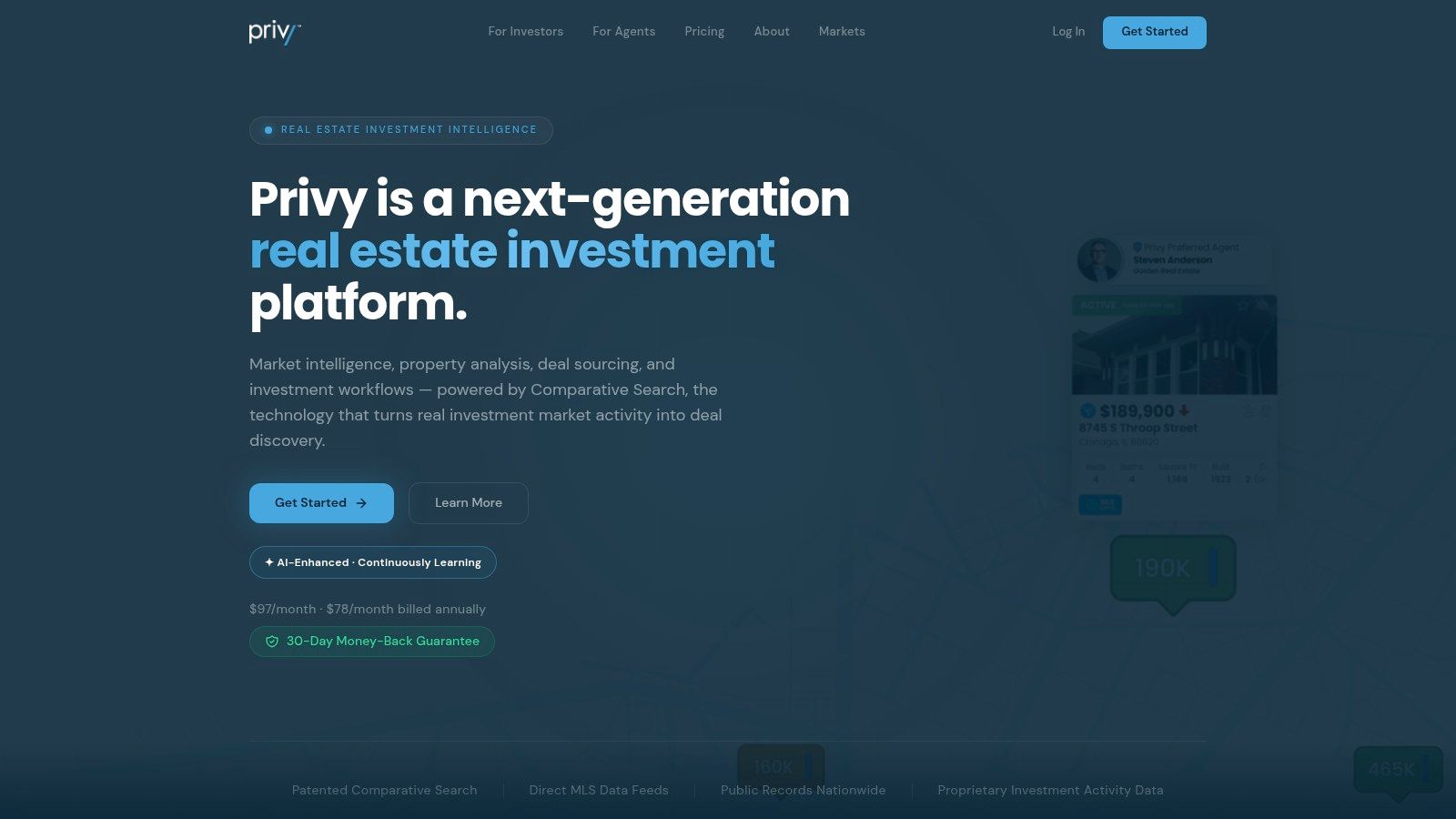
Privy is designed around investor-style comping and deal sourcing rather than general consumer real estate research. Its LiveCMA workflow and investor comps logic help wholesalers and acquisition teams identify comparable properties that fit strategies such as flips and BRRRRs.
The practical benefit is pattern recognition. Users can search for properties that resemble previous investor transactions, create printable or shareable CMAs, and set alerts for potential opportunities. That makes Privy useful when the team needs to screen a defined market repeatedly and communicate its reasoning to sellers, partners, or acquisition managers.
Geographic coverage drives the decision
Privy's main trade-off is geographic scope. Pricing varies with market coverage, and nationwide access costs more than a focused local setup. That isn't necessarily a problem for a market-specific wholesaler, but it can complicate selection for a distributed acquisitions team screening several regions.
The tool works best when the investor has a defined buy box and understands what a useful comp looks like locally. Investor comps can improve the relevance of screening, but they don't eliminate the need to check condition, renovation quality, transaction timing, and neighborhood differences. A strong CMA is still an input into underwriting, not an automatic offer.
Privy is a good match for lead generation plus fast comping. It won't provide the same rental bookkeeping depth as Stessa or Baselane, and it isn't intended to replace project execution software. Teams should confirm current market availability and pricing before building a nationwide workflow around it.
7. Mashvisor
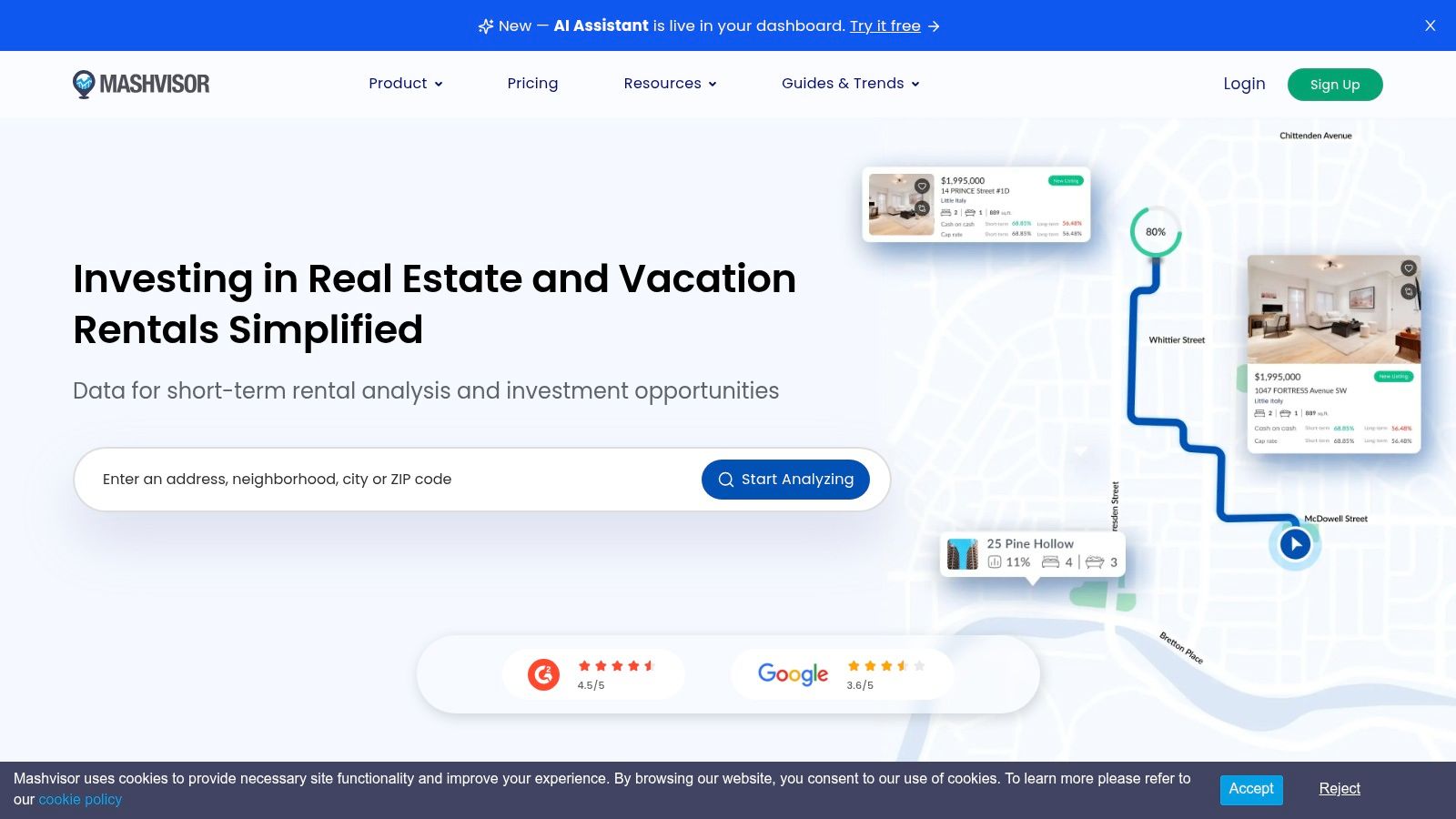
Mashvisor helps investors decide where and how a rental property might work. Its investment-property finder, market filters, cash-flow modeling, cap-rate and cash-on-cash analysis, and comparison between traditional and Airbnb strategies make it especially relevant to buy-and-hold investors.
The tool is useful before a final offer, when the investor is comparing locations, neighborhoods, and operating strategies. A property that looks weak as a traditional rental may appear more attractive as a short-term rental, while local rules, operating costs, seasonality, furnishing needs, and management arrangements can change the conclusion.
Validate the rental model locally
Mashvisor's value comes from bringing acquisition research and rental metrics into the same workflow. API availability also gives larger teams a path to connect market intelligence with internal screening or reporting systems.
The limitation is model dependence. Rental revenue, occupancy, expenses, and neighborhood performance can vary by market and by property type, so users should cross-check local rents, insurance, taxes, regulations, and comparable listings. A projected cash-on-cash return is only as reliable as the assumptions beneath it.
Rental underwriting rule: Change the strategy, vacancy, expense, and financing assumptions before deciding that a property works.
Mashvisor is strongest for strategy validation and market discovery, not for detailed rehab execution or accounting. It pairs well with a dedicated offer underwriter when the investor needs ARV, repairs, and MAO in addition to rental-market analysis.
8. Zilculator
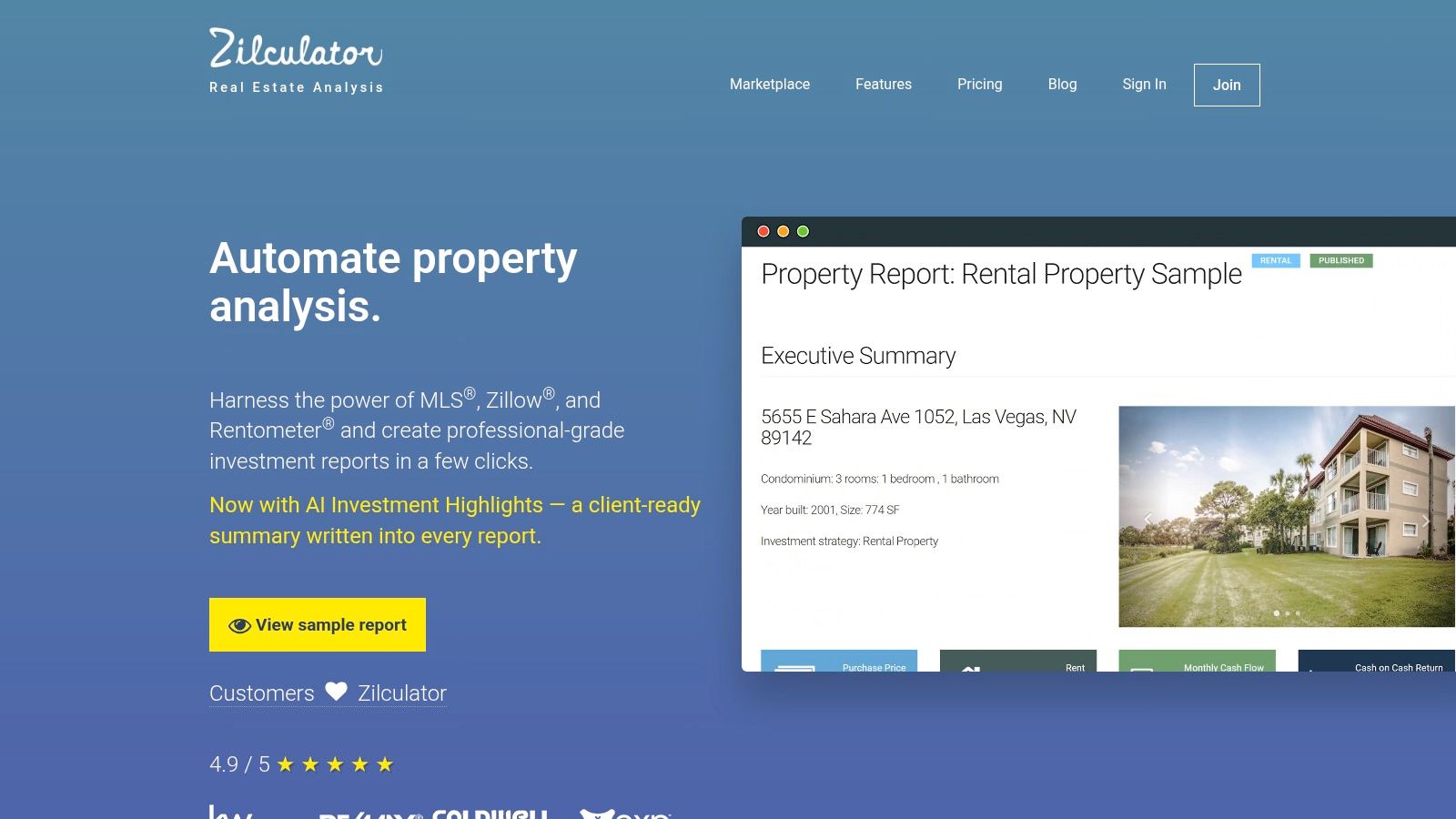
Zilculator focuses on the handoff between analysis and presentation. It supports rental, flip, and BRRRR workflows, with CMA and comp sections, rental comps, and reports that can be branded, white-labeled, and shared through public links.
That makes it valuable to agents, wholesalers, and acquisition professionals who need a lender-ready or buyer-facing document without redesigning a spreadsheet for every deal. Preset report formats, including lender, marketing, and full versions, help users present the same underwriting logic to different audiences.
Reporting is the differentiator
Zilculator's simple flow suits investors who need to produce polished materials quickly. Branded reports can support wholesale assignments, lender conversations, or partner reviews, while public sharing reduces the friction of sending large files. Announced AI memo updates may add another layer of presentation support, but users should verify exactly what is live in the current product.
Pricing requires more caution than the interface. Plan tables and pricing have varied across subdomains, and some changes have been announced. Confirm the current plan, report limits, branding rights, and sharing options at checkout rather than relying on an older comparison page.
Zilculator isn't the strongest choice for a landlord seeking ongoing bookkeeping or a flipper managing detailed work orders. Its best job is to turn assumptions and calculations into a client-ready analysis package. Validate the underlying comps and rental inputs independently, then use the reporting layer to make the decision understandable to someone who wasn't involved in the original research.
9. FlipperForce
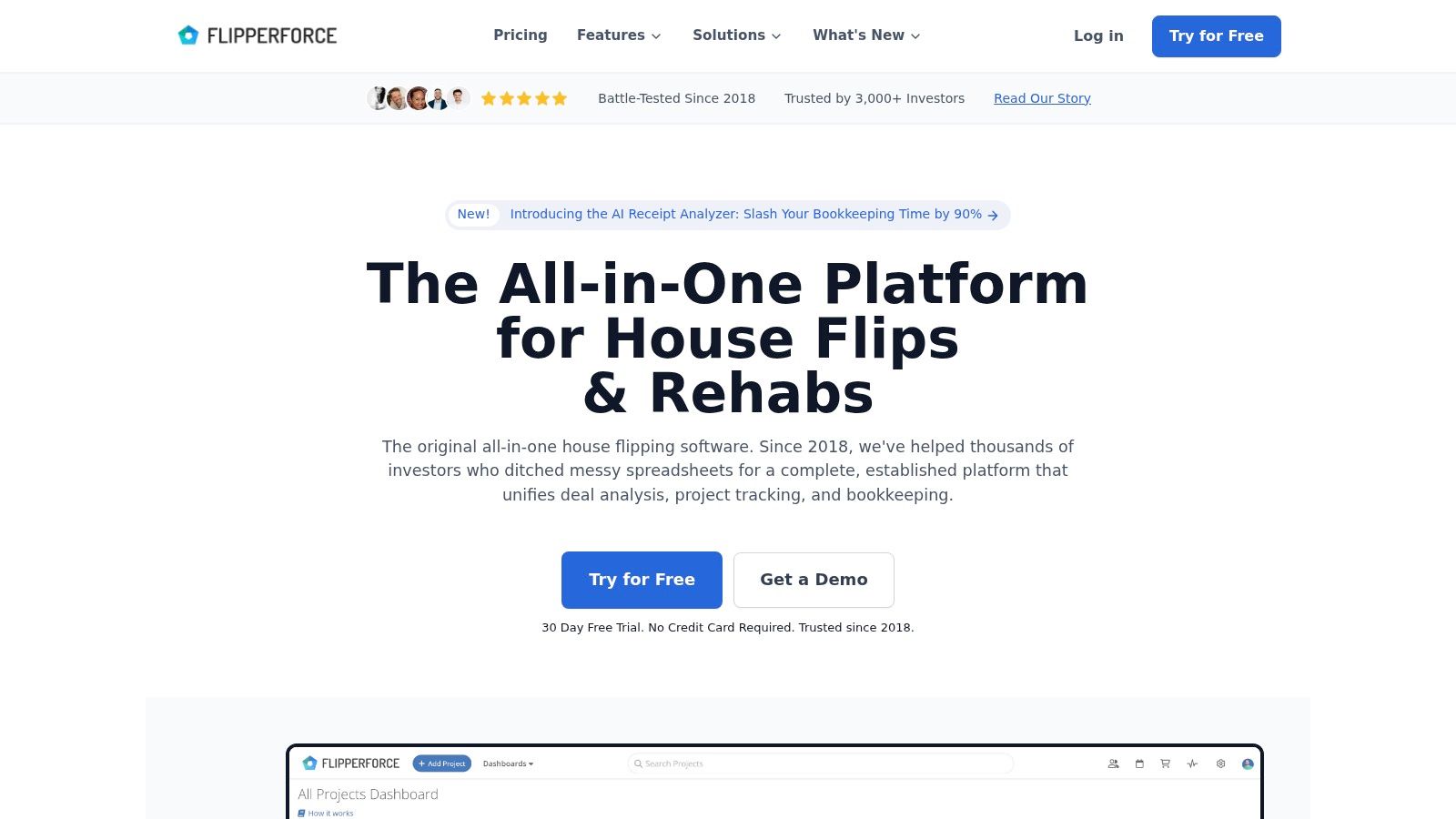
FlipperForce is built around the full fix-and-flip project, not just the initial acquisition decision. It combines deal analysis, rehab estimating, cost templates, project management, expense tracking, accounting dashboards, investment reports, and portfolio views.
That combination is useful for teams running multiple renovations at once. A flipper can move from the initial deal model into scope planning, track project expenses, monitor execution, and review project-level profitability without maintaining separate spreadsheets for every property. Team collaboration and lender or partner reporting strengthen the operational case.
Underwriting and execution need different controls
The advantage is reduced spreadsheet sprawl. Rehab templates and cost databases create a repeatable starting point, while expense tracking helps compare the original budget with actual project performance. Portfolio dashboards then expose how capital and profit are distributed across active and completed flips.
The limitation is tier depth. Project management and all-in-one functions sit in higher-priced plans, so a small investor may find the platform more than necessary for occasional projects. QuickBooks synchronization is listed as coming soon rather than available, which matters if the accounting system must remain the formal source of truth.
FlipperForce is strongest for fix-and-flip execution and portfolio-level P&L visibility. It shouldn't be used as the only source for comp validation or local market research. Confirm the acquisition assumptions separately, then use FlipperForce to manage the work that begins after the offer is accepted.
10. AirDNA MarketMinder and Adapt
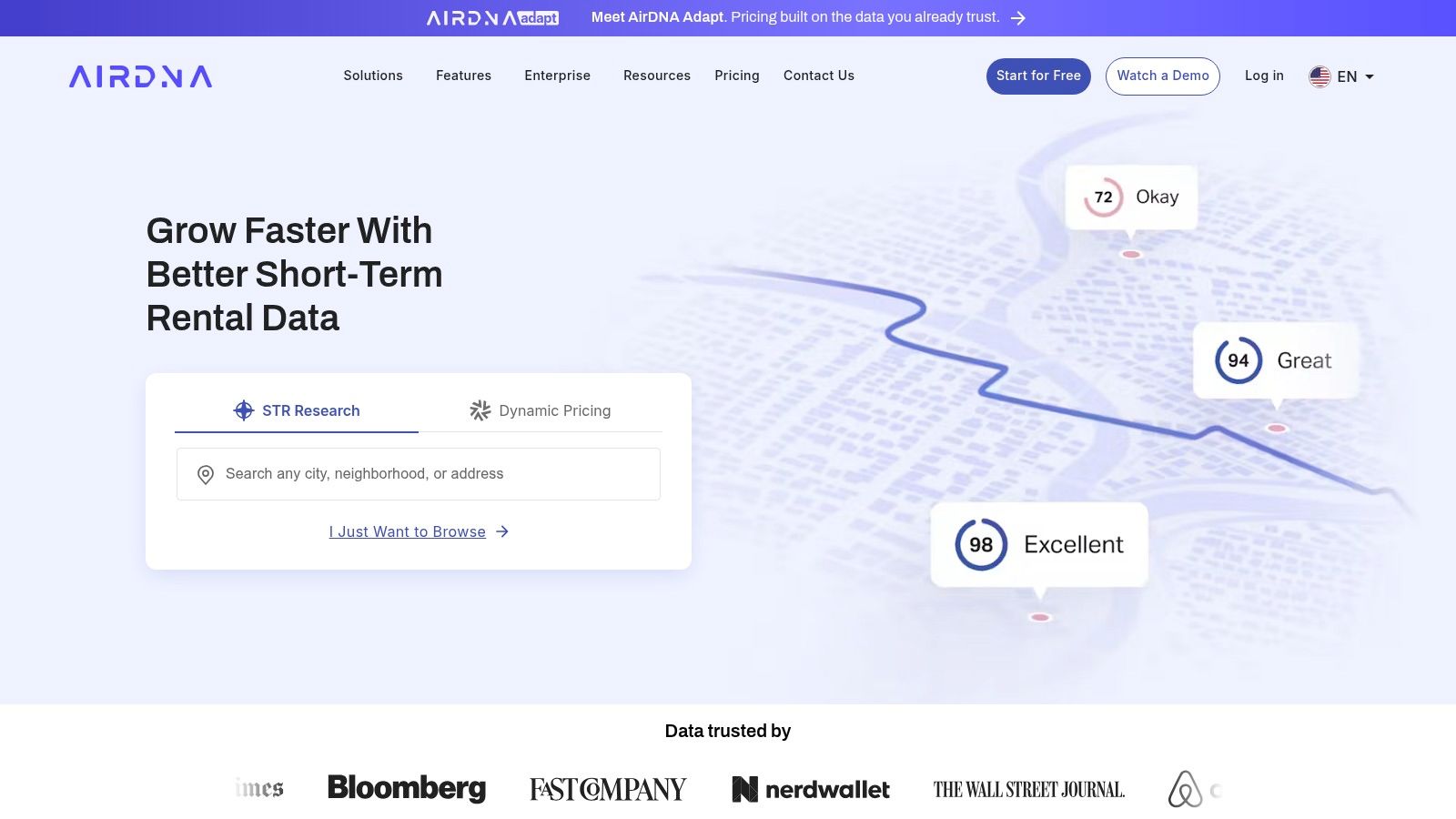
AirDNA serves investors whose returns depend on short-term-rental demand, pricing, and operating performance. MarketMinder provides supply, demand, ADR, occupancy, and revenue benchmarks, while Rentalizer supports market-level revenue planning. Adapt adds dynamic pricing and revenue-management capabilities for operating properties.
The platform's role is different from a traditional deal analyzer. It helps answer whether a short-term-rental strategy has enough market support and how revenue assumptions may change across locations. That makes it useful for STR acquisitions, multi-market operators, and investors comparing short-term rentals with traditional leases.
Revenue estimates still need a local reality check
AirDNA's strength is market-specific STR intelligence and pacing data. Investors can use it to challenge optimistic revenue assumptions before committing capital, then apply the findings to acquisition underwriting, pricing decisions, and portfolio exposure.
The trade-off is cost and uncertainty. Broad multi-market coverage can be expensive, and estimates vary by market. Local regulations, property layout, furnishing quality, seasonality, cleaning costs, management fees, taxes, and platform changes can all alter the result. A revenue benchmark doesn't prove that a specific property will achieve the benchmark.
Investors evaluating this category can also review the guide to the best tools for analyzing Airbnb investment properties. AirDNA is strongest as a rental-strategy validation layer. Pair it with an offer underwriter for ARV, repairs, financing, and MAO, then validate the final operating model with local comparable listings and an experienced manager.
Top 10 Portfolio Analysis Tools Comparison
| Product | Core focus & key features | Speed / Accuracy (UX) | Value & Pricing | Target audience & USP |
|---|---|---|---|---|
| PropLab 🏆 | AI comping, ARV, rehab estimates, MAO, Daily Deals, PDF exports, API ✨ | 60s analyses; ARV ±3–5% reported ★★★★★ | Free tier → Pro $49/mo (ann.) 💰 | 👥 Flippers, wholesalers, acq teams; ✨traceable comps & lender‑ready reports |
| Stessa | Portfolio dashboards, automated bookkeeping, bank/credit feeds, Schedule E exports | Continuous portfolio reporting; reliable for rentals ★★★★ | Free → Pro (paid features) 💰 | 👥 Small landlords/portfolio investors; ✨automated bookkeeping & cash‑flow visibility |
| Baselane | Integrated banking (FDIC partner), rent collection, bookkeeping, NOI/rent roll reports | Native banking + rent collection; smooth cashflow UX ★★★★ | Free core features; paid add‑ons 💰 | 👥 Landlords seeking banking + bookkeeping; ✨built‑in banking & rent collection |
| DealCheck | Deal analyzers for flips/BRRRR/rentals, MAO back‑solve, polished PDFs, mobile apps | Fast mobile underwriting; scenario comparisons ★★★★ | Freemium → Plus/Pro tiers 💰 | 👥 Investors & wholesalers; ✨mobile-first underwriting & shareable reports |
| PropStream | Nationwide property & owner records, comps, rehab/ROI calculators, lead lists | Data‑rich sourcing + comps; steeper learning curve ★★★★ | Subscription + add‑ons (lead credits) 💰 | 👥 Lead generation teams & investors; ✨comprehensive nationwide data |
| Privy | Investor comps, LiveCMA, investor‑style comparables & market alerts | Focused investor comping; quick market alerts ★★★★ | Tiered by market coverage; regional pricing 💰 | 👥 Wholesalers & acquisitions teams; ✨investor pattern‑matching comps |
| Mashvisor | Investment property finder, cap‑rate & cash‑flow modeling, STR vs traditional analysis | Good for market screening; data recency varies ★★★ | Subscription plans; API option 💰 | 👥 Buy‑and‑hold & STR investors; ✨STR vs traditional revenue comparisons |
| Zilculator | Deal analysis with branded/white‑label PDFs, shareable links, BRRRR/flip workflows | Fast underwriting + strong branded reports ★★★★ | Paid tiers; pricing varies by plan 💰 | 👥 Agents, wholesalers, lenders; ✨white‑label investor reports |
| FlipperForce | Flipping + rehab estimators, project management, expense tracking, portfolio P&L | Underwriting → execution tracking for projects ★★★★ | Paid tiers; PM features in higher plans 💰 | 👥 Flipping teams & contractors; ✨rehab templates + project management |
| AirDNA (MarketMinder & Adapt) | STR supply/demand, ADR/occupancy benchmarks, dynamic pricing (Adapt) | Deep STR comps & revenue pacing; market variance ★★★★ | Paid (can be expensive for broad coverage) 💰 | 👥 Short‑term rental investors/hosts; ✨dynamic pricing & market revenue benchmarks |
Match the Tool to the Decision
Choose the tool according to the decision that could lose you money, not according to the longest feature list. Acquisition teams need fast, explainable answers about price, repairs, exit value, and risk. Operating teams need clean income and expense data. Rental investors need realistic demand and cash-flow assumptions. Flippers need visibility from approved budget through final sale.
For rapid offer underwriting, start with PropLab or DealCheck. PropLab is the better fit when speed, comp traceability, confidence scoring, automated rehab estimates, red flags, MAO, and lender-ready outputs matter. DealCheck is a strong alternative when you want flexible scenario modeling across flips, rentals, BRRRR, multifamily, and commercial deals. Neither tool removes the need to verify condition, financing, local taxes, insurance, or the relevance of the selected comps.
Choose PropStream or Privy when sourcing is central to the business. PropStream brings property records, owner intelligence, lead lists, skip tracing, and analysis into a broad prospecting workflow. Privy is more focused on investor comps, LiveCMA workflows, alerts, and repeatable screening in selected markets. Confirm coverage, add-on costs, and the fields your CRM needs before you design the acquisition process around either platform.
For rental portfolio financial visibility, compare Stessa and Baselane. Stessa is a natural fit for automated bookkeeping, cash-flow reporting, net worth views, and landlord-focused portfolio dashboards. Baselane is more compelling when integrated banking and rent collection belong in the same operating layer. Both should be tested with your accountant's reporting requirements and your preferred ledger workflow.
Use Mashvisor or AirDNA when the central question is whether a rental strategy can support the purchase. Mashvisor is useful for comparing traditional and short-term rental approaches, while AirDNA is the more specialized choice for STR market intelligence, revenue benchmarks, and pricing operations. Treat both as assumption-validation tools, not guarantees of property-level performance.
Select Zilculator when the analysis must become a polished, branded report for a lender, buyer, seller, or partner. Select FlipperForce when the bigger problem is execution, including rehab budgets, expense tracking, project management, collaboration, and portfolio-level project reporting. Their value begins at different points in the investment cycle.
Before committing, test every shortlisted platform with a representative property from the market and strategy you use. Check the recency and relevance of the comps, enter known repair conditions, compare rental assumptions with local evidence, confirm current pricing at checkout, and inspect export formats. Then document how the output moves into your lender package, partner review, accounting system, CRM, project tracker, or portfolio report.
That last step is often the difference between buying software and improving decisions. Industry research reflects the integration problem: the Urban Land Institute's PropTech Survey found that only 15% of surveyed real-estate firms said their tools were fully integrated. A portfolio platform should reduce duplicate entry, preserve assumptions, expose source dates and uncertainty, and make a decision reproducible when a lender, partner, or credit committee asks how you reached it.
Climate deserves the same treatment. A binary hazard flag isn't enough if flood, wildfire, heat, or storm exposure can alter insurance, capex, vacancy, financing, or resale assumptions. Research on climate disclosure shows that only 23% of the largest listed real-estate companies disclosed portfolio exposure to different levels of climate risk, while 6% disclosed adaptation strategies and 2% reported concrete adaptation measures in the cited dataset at Green Engagement. Investors should convert material hazards into sensitivity cases, reserves, hold-period changes, or bid adjustments instead of leaving them as a note nobody uses.
Finally, keep uncertainty visible. Sector research cited by Vistra reports that although 90% of surveyed real-estate professionals rated their data as good or excellent, nearly two-thirds said poor data had restricted fundraising or forced them to abandon strategies. Speed is valuable, but a fast ranking built on stale records or missing condition data can scale bad decisions. The best portfolio analysis tools help you identify what is known, what is assumed, and what must be verified before capital is committed.
PropLab helps investors move from property address to ARV, rehab estimate, MAO, risk flags, and offer-ready report in about 60 seconds. If you need faster, more traceable underwriting for flips, wholesale acquisitions, rentals, or lending reviews, test the workflow with a live deal by visiting PropLab.
Tags
About the Author
P
PropLab Team
Real Estate Analysis Experts
The PropLab team consists of experienced real estate investors, data scientists, and software engineers dedicated to helping investors make smarter decisions with AI-powered analysis tools.
Free account
Underwrite your next deal in under a minute
3 free analyses, no credit card. ARV, rehab, comps and exit strategy in one report.
